Puebla (visited January 2026) is memorable for a few things in its historic colonial center: some great food options, splendid baroque churches, gorgeous talavera pottery and tiles.
Food
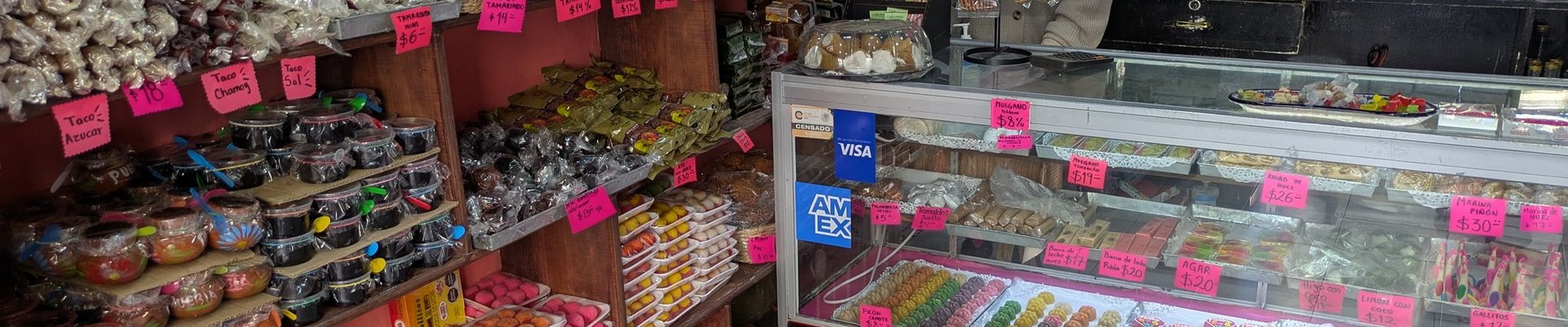
Puebla is known for originating several dishes, including the dark mole poblano sauce and chiles en nogada (which I was unable to sample due to it being out of season). But it is also home to several distinct sweet confections, such as camotes, cigar-shaped treats made with sweet potatoes; very sugary macarrones de leche; and a particularly ubiquitous cookie, the tortitas de santa clara. You can find all these and more along the Calle de los Dulces
Churches
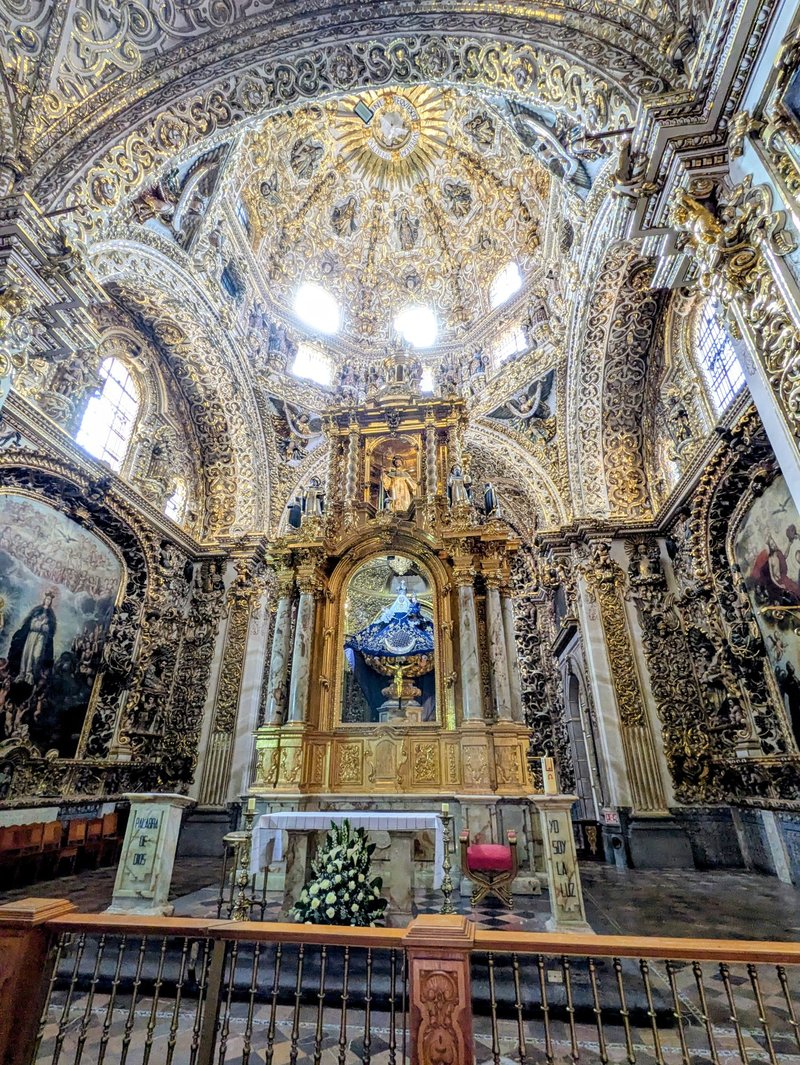
Nearly everyone mentions the overly ornate Chapel of the Rosary, which is quite amazing to behold.
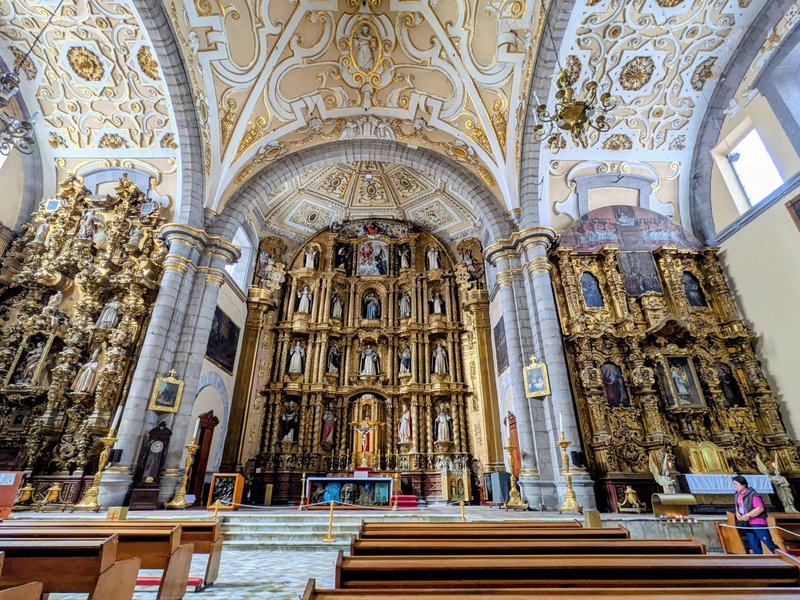
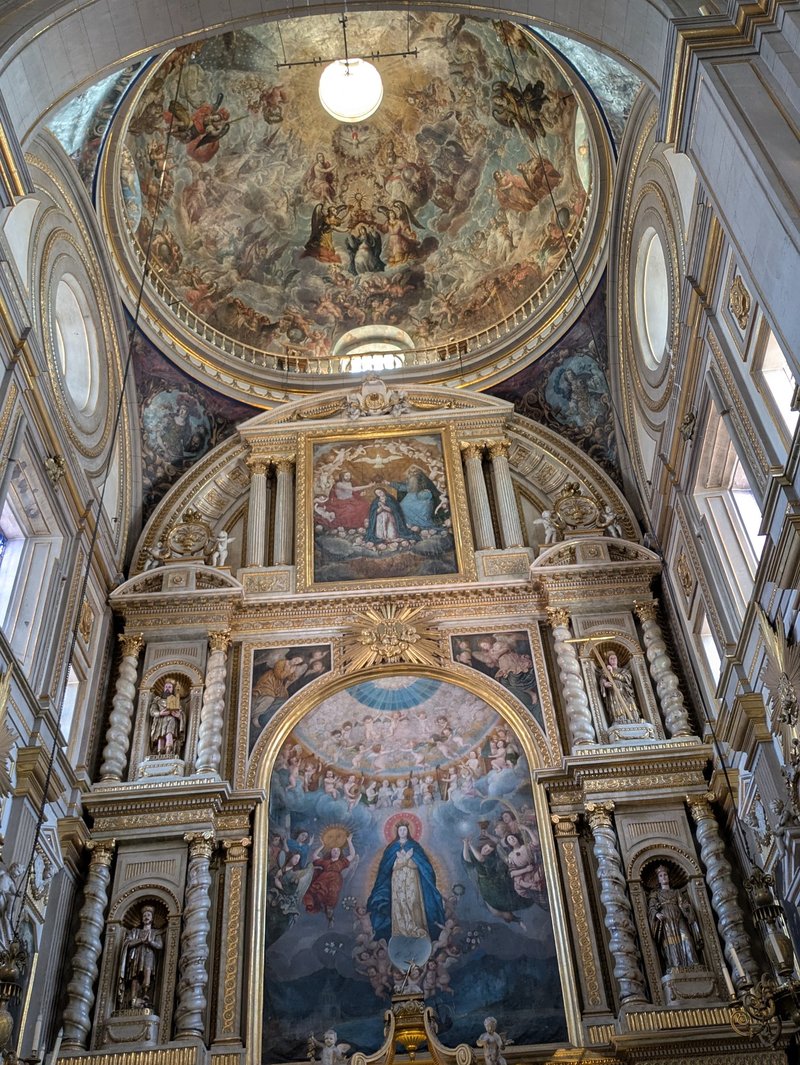
But the altar of the larger church of Santo Domingo (which encompasses the Rosary chapel) is also very impressive, featuring numerous gilded statues of saints.
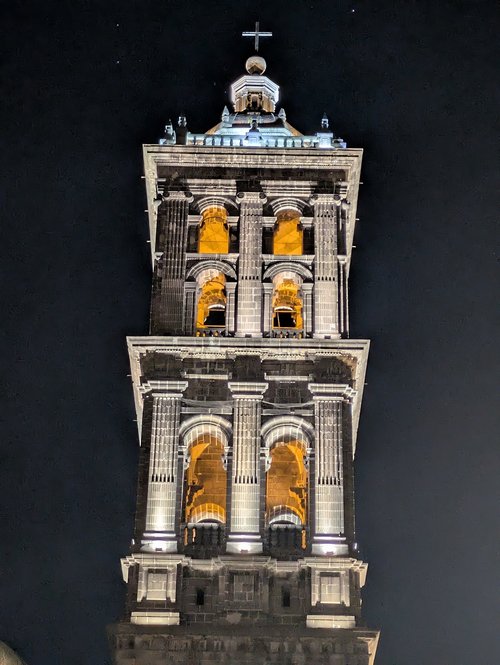
The main Puebla Cathedral of Our Lady of the Immaculate Conception is also very impressive inside and out. The furthest forward Altar of the Kings has a beautiful painting of the Assumption of Mary with dozens of cherubs, and the dome of that altar is a masterpiece from 1688.
We also visited the former Convent of Santa Rosa de Lima, a few blocks off the Plaza Mayor. It's worth the short walk and I think charged 50 pesos entrance. One of the featured rooms here is the tiled kitchen, where the delicious mole poblano was said to have been invented. It also houses a contemporary poplular art museum with many very impressive ceramic pieces.
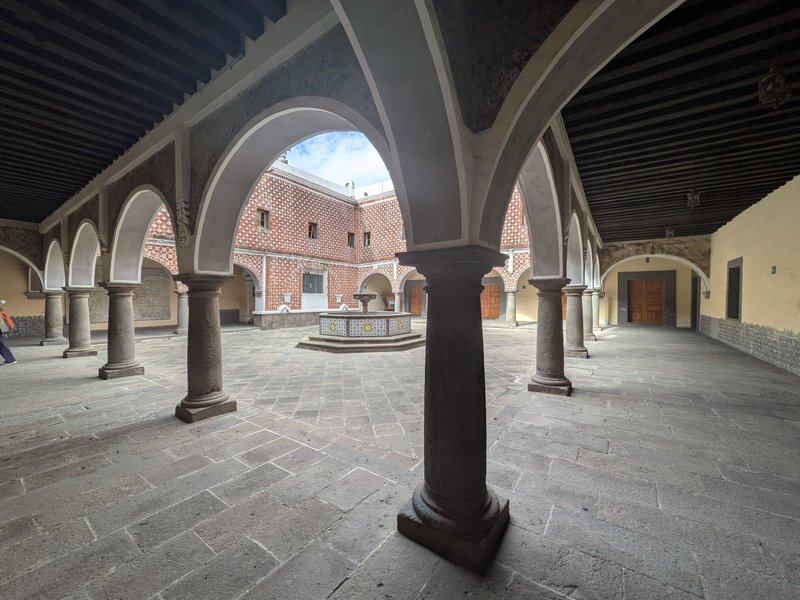
We stayed in a former convent now made into the hotel Quinta Real. Not the cheapest place in town, but pretty moderately priced and well worth it. The convent was founded in the 16th century, but has been beautifully updated as a hotel -- very modern, functional, clean, and luxurious while maintaining its historical atmosphere with multiple courtyards. Two blocks from the cathedral.
Ceramic Tile
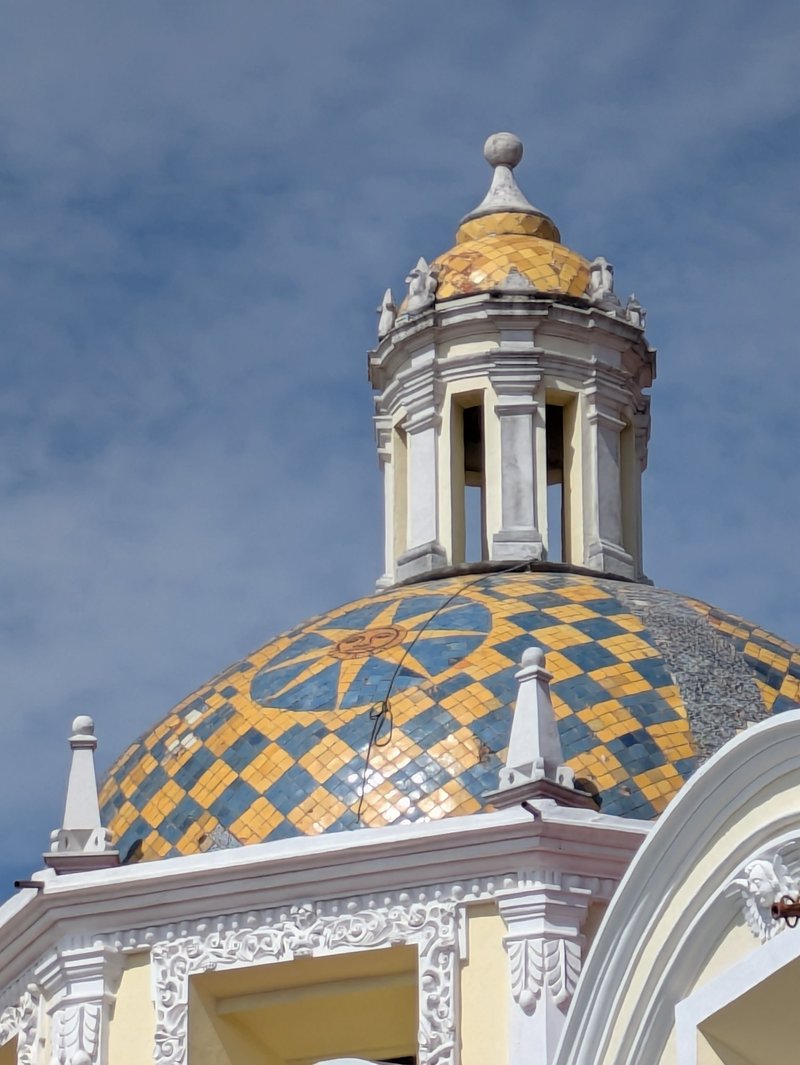
You can't miss the ceramic tiles, dinnerware, objects d'art, and trinkets. Originally imported, they soon started making it in Puebla and it is everywhere now: adorning many walls, church domes, floors, and of course in every tourist shop and restaurant.
Other
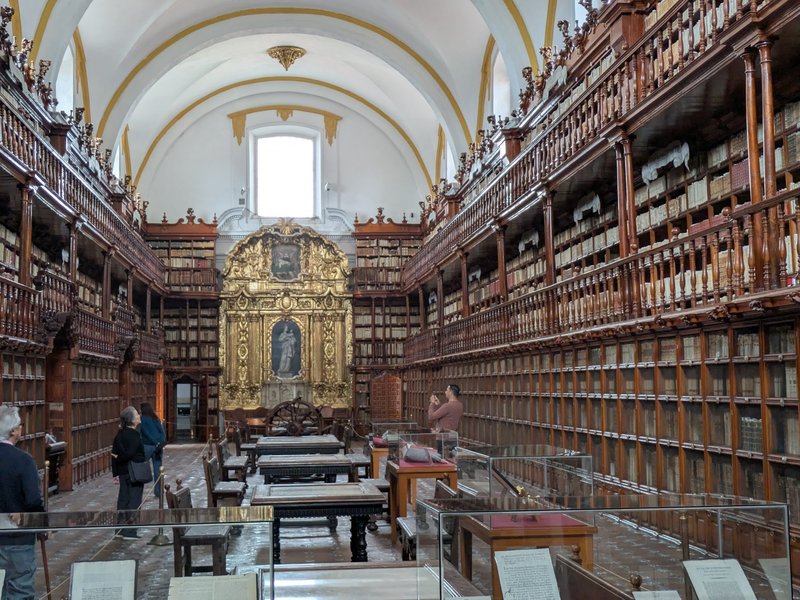
I really enjoyed the Bilbioteca Palofoxiana, a library which was founded in 1646. They charge 50 pesos entrance now, but a lot of people just come up the stairs and look in from outside the impressive doorway for free. If you pay, you get to see some of their older historic books that they have opened on display.
While You're There
Puebla is a great base for tourism, even outside of its historical center.
If you appreciate the baroque style of the churches in Puebla, then you have lots more options. We visited the International Museum of the Baroque a 25 minute ($6) Uber ride from the center and enjoyed it, but I wasn't very interested in the large installation of modern art they have there.
Many more fantastic baroque churches can be found around nearby Cholula, including the ornately tiled San Francisco Acatepec and the very, very baroque Santa Maria Torantzintla. Cholula is also famous as the home of its Great Pyramid, the largest by base area in the Americas. Lots of fun to visit, and you can walk up to the pretty church on top of it now, even on Mondays when the archeological site is closed.
We also visited the wonderful pre-hispanic archeological sites of Cacaxtla and Xochitécatl on our way to Puebla. Cacaxtla has some really astounding colorful murals.
Some of the WHS Popocatepetl monasteries are also in the area, but we didn't make it there.
Comments
No comments yet.