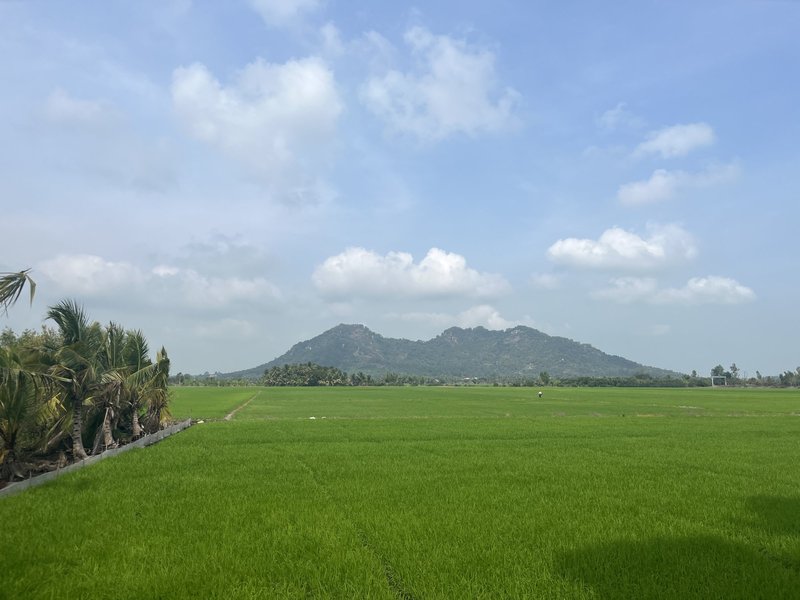
Vietnam plans to nominate the Oc Eo – Ba The archaeological site for UNESCO World Heritage status in 2027. Located 220km west of Ho Chi Minh City (HCMC), the site pairs the prominent Ba The mountain with the archaeological remains of Oc Eo, the type-site of the eponymous culture.
The site was first identified and excavated in 1944 by the French archaeologist Louis Malleret. He used aerial photography to detect the outlines of ancient canals and structures buried beneath the rice fields. It turned out that between the 2nd and 7th centuries CE, this region served as a vital maritime "crossroad" linking Southeast Asia with South, Southwest, and Northeast Asia. The Oc Eo people constructed a vast network of ancient canals across the Mekong Delta—one of which stretched as far as Angkor Borei in modern-day Cambodia. The remains of their culture reveal a fusion of indigenous features and those of the ancient Indian civilization, including Hinduism.
Prelude in HCMC
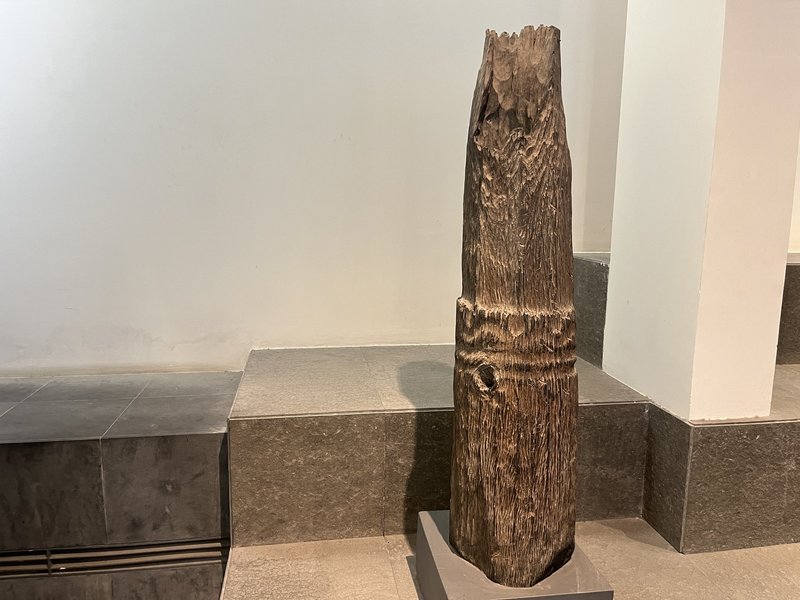
A trip to Oc Eo is best preceded by a visit to the HCMC Museum of History. This comprehensive museum has an exhibition room solely dedicated to the Oc Eo Culture. Shown are mostly ornaments in gold, bronze and tin, as well as sophisticated glass and semi-precious jewelry. The people of Oc Eo also used a lot of wood, even for their religious statues, of which some fine examples can be seen at the museum. They built their houses on wooden stilts at the foot of the Ba Thé mountain, in an environment prone to seasonal flooding. The canals allowed the residents to navigate by boat directly from their homes.
The Visit
The Oc Eo culture was fairly widespread across South-Western Vietnam, as can be seen from where the objects displayed at the museum were found. However, according to the Tentative Site description, the nomination is limited to two clusters of archaeological sites around the contemporary village of Oc Eo. I went there with a driver from the nearby city of Long Xuyen. I had brought a print-out with me with a selection of the places I wanted to visit, written in Vietnamese. To get to Oc Eo, it’s a one-hour ride through the typical Mekong River Delta countryside, with still a lot of canals and green rice fields.
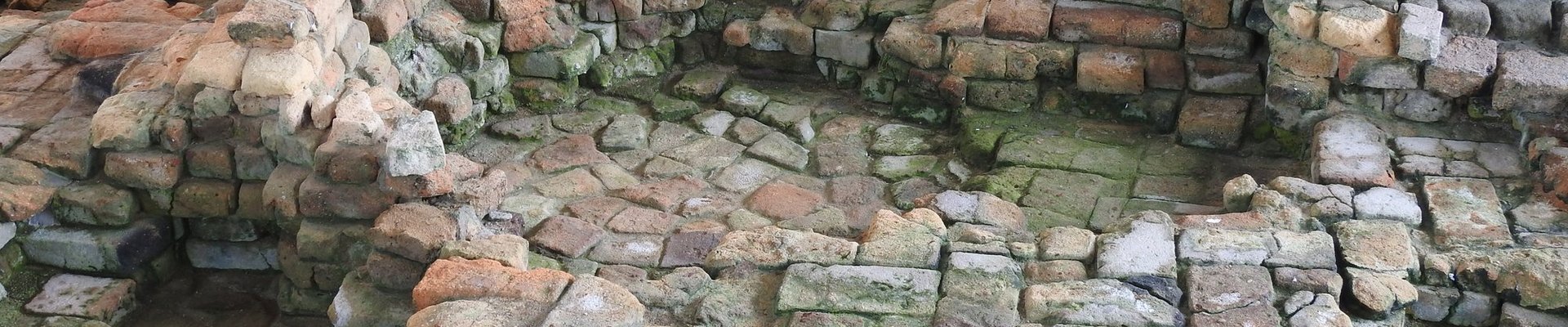
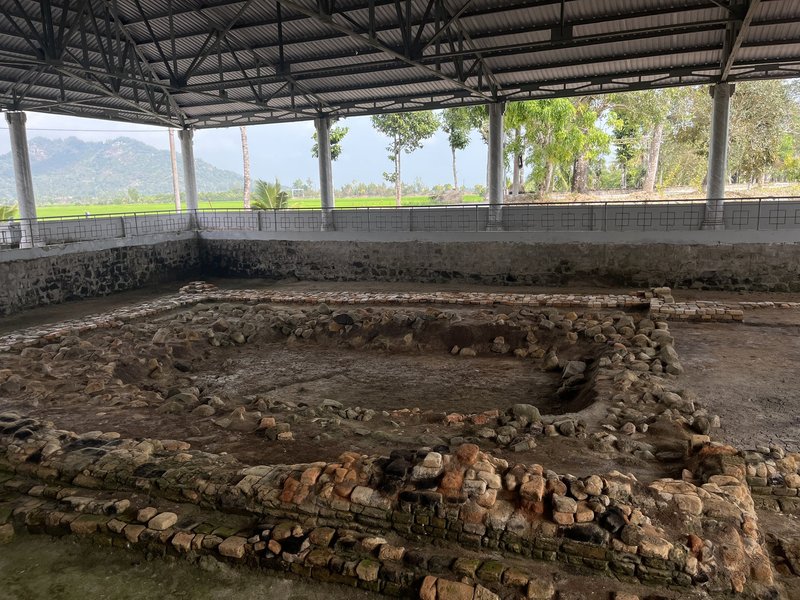
Our first stop was the Linh Son Nam site. It is signposted from the main road in Oc Eo and I had to walk up an alley for 100m to reach the site. Like all other digs we visited, this one has a protective cover over the excavated site, a walkway around it, some benches to sit on and an information panel in Vietnamese and English. Linh Son Nam holds two “architectural structures” (of unknown use, possibly religious) and two tombs. Traces of decomposing wood can clearly be seen at the edges of the otherwise mostly brick structure. Also visible are the drainage pipes. Burials in jars have been found at this location.
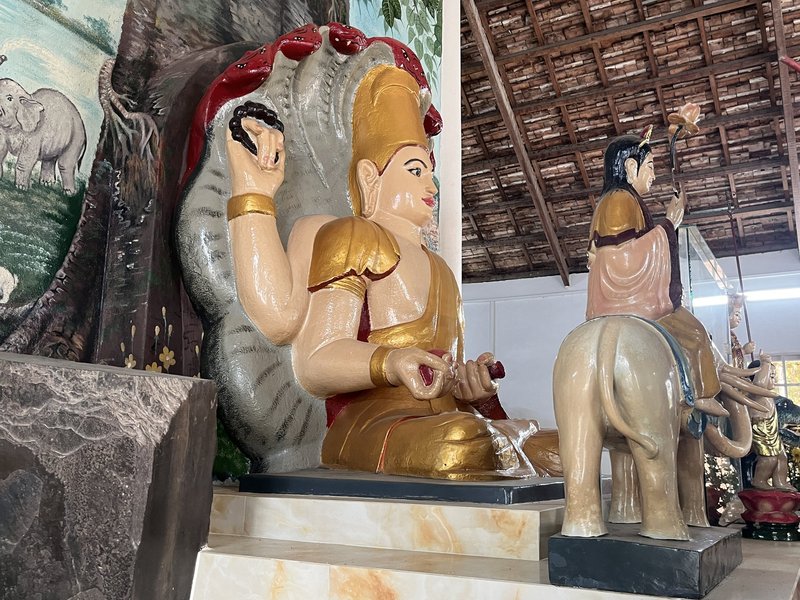
‘Next door’ lies the Linh Son Nam pagoda. This is now a bright yellow and large Buddhist temple, but the ground it stands on has Oc Eo roots as well. Its current use is a good example of the religious transformations the area has gone through, a bit similar to Angkor, from indigenous to Hindu to Buddhist. The pagoda’s main relevant feature is the “Four-Handed-Buddha”, a former standing Vishnu statue transformed by locals into a seated Buddha statue. It is now so brightly painted and embellished that it is hard to believe that it dates back to the 5th century (but all sources I could find confirm this is the original statue).
Just some 500m down the road lies Go Ut Tranh. I liked this the best among the ones visited, probably because the outline of what it once was is the clearest. It houses the remains of a large Hindu temple, featuring three Hindu shrines (dedicated to Shiva, Brahma, and Vishnu, respectively) in a row. It was only rediscovered in 2010.
Our final stop was Go Cay Thi. This one lies a few km outside of the town, amidst the rice fields. It‘s the only one among the sites we visited that has some sort of a formal entrance, with a fence that can be closed. All other sites are open 24 hours a day and there are no entry fees. Go Cay Thi has two excavated lots next to each other. This was the site from where Malleret started his work in 1944. It could have been a Borobudur-like stupa, or a palatial structure: there is no final verdict yet. To the casual visitor, it now mostly stands out for its creative brick-laying with curves and different colours used. Go Cay Thi also offers the best views of Ba Thé mountain.
Practicalities
The site isn’t that straightforward to reach. I first tried with a couple of tour companies in HCMC (hoping for both transport and a knowledgeable guide), but even for private tours, they did not want to deviate from their standard Mekong Delta itineraries and Oc Eo certainly is not part of those.
So I did it by myself on public transport. I stayed for two nights in Long Xuyen, the closest city to Oc Eo. It is served by several buses a day from and to HCMC with the company FUTA (and others). The journey takes 5-6 hours, which is mostly spent on getting out of HCMC. Long Xuyen is a provincial city where they don’t see many foreigners. The reception of my hotel found me a driver for the 3h round trip to Oc Eo, which cost 900,000 dong (about 30 EUR). Long Xuyen city also has the An Giang museum (free), which is worth a visit as it has more objects from Oc Eo, including another larger-than-life wooden religious statue.
Comments
No comments yet.