Italy
Villa Adriana (Tivoli)

Villa Adriana (Tivoli) comprises the remains of the retreat of the well-travelled and erudite Roman Emperor Hadrian.
The palatial complex comprises some 30 buildings, designed in the architectural traditions of Ancient Greece, Rome and Egypt, and brought together into an ‘ideal city’. Its monuments also inspired architects from the Renaissance, Baroque and even later periods.
Community Perspective: It’s a vast complex, one can easily spend 2-3 hours here. It is not visited often compared to other Ancient Roman sites. “Pleasant, but rather forgettable” seems to summarize the general opinion, although it became Frédéric’s favourite of the three Villas in Tivoli (which he managed to all visit in one day on public transport).
Site Info
Official Information
- Full Name
- Villa Adriana (Tivoli) (ID: 907)
- Country
- Italy
- Status
-
Inscribed 1999
Site history
History of Villa Adriana (Tivoli)
- 1999: Inscribed
- Inscribed
- Type
- Cultural
- Criteria
- i
- ii
- iii
Links
- UNESCO
- whc.unesco.org
- Official
-
- visittivoli.eu — Visit Tivoli
- Related
-
- villa-adriana.net — Extensive private website with plans etc
All Links
UNESCO.org
- whc.unesco.org — whc.unesco.org/
Official Website
- visittivoli.eu — Visit Tivoli
Related Resources
- villa-adriana.net — Extensive private website with plans etc
News Article
- March 26, 2016 livescience.com — Emperor Hadrian's Villa Yields Posh, Arty Apartment
- Dec. 29, 2011 cbsnews.com — Controversy over landfill near Hadrian's Villa
- July 7, 2011 google.com — Historic Hadrian's villa 'at risk of collapse'
Community Information
- Community Category
- Archaeological site: Ancient Rome
Travel Information

Recent Connections
-
Viewable from another WHS
"The Salon on the ground floor [of the…
-
Slavery
The Villa Adriana had slave quarters. (…
-
Restored by anastylosis
"As far back as the latter half of the …
Connections of Villa Adriana (Tivoli)
- Individual People
-
-
Gertrude Bell
Photo taken March 1910 -
Emperor Hadrian
His rural residence
-
- Trivia
-
-
In the Vatican Museums
an over 2m high Egyptian statue (gregoriano egizio) -
Viewable from another WHS
"The Salon on the ground floor [of the Villa d'Este] is the first room of the personal apartments of Ippolito; it was used for receptions, and features an extensive view of the garden below and countryside beyond, including Villa of Hadrian." (Wikipedia)
-
In the Louvre
The Louvre has friezes that come from the Maritime Theatre of Hadrian's Villa. (Link)
-
Famous Love Stories
Emperor Hadrian and his gay lover Antinous (in 1998 the remains of the monumental tomb of Antinous, or a temple to him, were discovered at Villa Adriana)
-
- History
-
-
Fusion
"(...) the villa was designed as an ideal city and incorporates the architectural traditions of Ancient Greece, Rome and Egypt." – "Villa Adriana, reminiscent of famous places and buildings throughout the empire, reproduced elements of the material cultures of Egypt, Greece and Rome in the form of an "ideal city"." – "Criterion (i): The Villa Adriana is a masterpiece that uniquely brings together the highest expressions of the material cultures of the ancient Mediterranean world." (OUV)
-
Residences of Roman Emperors
"constructed at Tibur (modern-day Tivoli) as a retreat from Rome for Roman Emperor Hadrian during the second and third decades of the 2nd century AD. Hadrian is said to have disliked the palace on the Palatine Hill in Rome, leading to the construction of the retreat." (Wiki)See en.wikipedia.org
-
- Architecture
-
-
Reinforced Concrete
"The successful excavation campaigns of the 1950s (...) unearthed the pool in front of the so-called Serapeum and a large part of the sculptural decoration that adorned the banks and the surrounding area. This unexpected discovery led to the decision to protect the original statues in a museum and to install copies made of reinforced concrete around the pool." (Information panel at the Villa Adriana)
-
Octagons
Several octagonally shaped structures at the Villa Adriana, e.g. the octagonal heated room in the thermae with heliocaminus, octagonal fountains in one of the courtyards of the Hall with three exedrae, the octagonal hall of the smaller baths, the octagonal vestibule of the Piazza d'Oro (Information panels at the Villa Adriana)
-
Early Under-floor Heating
-
Ideal City
Conceived as an Ideal City, planned for this purpose by the Emperor Hadrian (AB ev) -
Restored by anastylosis
"As far back as the latter half of the 19th century, restoration work carried out at Villa Adriana was undertaken in keeping with the theories and techniques of archaeological restoration (...). At the same time careful analysis and studies made possible to carry out partial anastylosis of some structures." (OUV) These structures include "the Serapeum, the Maritime Theatre, and the Room of the Doric Columns." (AB Ev)
-
Mosaic art
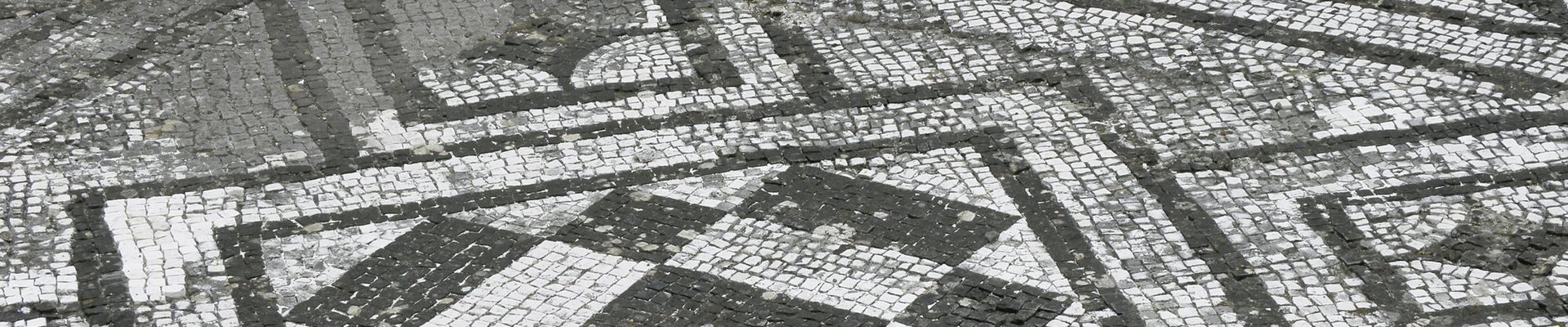
As for the decorative parts, they have been preserved and a large number of wall paintings of great interest are in good condition, as well as a large part of the marble and mosaic pavements of different kinds. (Nomination file, p. 17)
-
Replicas within the WHS
"The successful excavation campaigns of the 1950s (...) unearthed the pool in front of the so-called Serapeum and a large part of the sculptural decoration that adorned the banks and the surrounding area. This unexpected discovery led to the decision to protect the original statues in a museum and to install copies made of reinforced concrete around the pool." (Information panel at the Villa Adriana)
-
- World Heritage Process
-
-
Perfect Inscriptions
1999 -
2 or more nominated criteria rejected by AB
Rejected: 4, 5, 6. Accepted: 1, 2, 3.
-
- Religion and Belief
-
-
Nymphaeum
Several, see -
Serapea
"One of the most striking and best preserved parts of the Villa are a pool and an artificial grotto which were named Canopus and Serapeum, respectively. Canopus was an Egyptian city where a temple (Serapeum) was dedicated to the god Serapis. However, the architecture is Greek influenced (typical in Roman architecture of the High and Late Empire) as seen in the Corinthian columns and the copies of famous Greek statues that surround the pool. One anecdote involves the Serapeum and its peculiarly-shaped dome. A prominent architect of the day, Apollodorus of Damascus, dismisses Hadrian's designs, comparing the dome on the Serapeum to a "pumpkin". The full quote is "Go away and draw your pumpkins. You know nothing about these [architectural] matters." (Wiki) -
Jesuit Order
From the 16th to the 19th century, excavations multiplied, even by the owners of the land surrounding the villa, such as Count Fede or the Jesuits to whom the Pecile area belonged. (Wikipedia)
-
- Human Activity
-
-
Slavery
The Villa Adriana had slave quarters. (Information panels at the Villa Adriana)
-
Grand Tour
-
Historical Graffiti
By 18th century visitors, such as "the legendary architect/etcher Piranesi scribbled Piranesi 1741 into a grotto at Hadrian's Villa with a red crayon" -
Grand Cascade
-
LGBTQ culture
The "Antinoeion" is thought to be the "tomb housing the remains of Antinous.... built so that Hadrian could commemorate his paramour to whom he was joined by a deeply passionate and spiritual bond." Antinous was deified by Hadrain and later became a "gay icon" across many centuries and has been represented/referred to in "Gay" art and literature. See -See en.wikipedia.org
-
Olive Tree Landscapes
Much of the landscape of the archaeological site is composed of lush olive trees, which are mainly responsible for the romantic/pastoral image of the Villa Tiburtina. (Nomination file, p. 7)
-
- Constructions
-
-
Moats
"The Maritime (or Naval) Theatre is a circular structure 43m in diameter; the Ionic marble peristyle encloses a circular moat surrounding a central island on which there is a miniature villa." (Ab Ev)
-
Tunnels
Network of tunnels "to keep slaves, oxen and victuals below stairs" -
Cryptoporticus
"(...) there is a complex of underground elements, including cryptoportici and underground galleries, used for internal communications and storage." (OUV)
-
Tombs
Antinous Tomb -
Latrines
-
Theatres and Opera Houses
Greek Theatre: The so-called Greek theatre is an open-air theater that retains few remains of the steps and the auditorium. Originally, it was probably covered in marble. In reality, it has the characteristics of a Roman theatre, being circular rather than elliptical; it was intended for private performances. (Wikipedia)
-
Baths
"A third group of buildings comprises the baths, including Small Thermae, Large Thermae and the Thermae with Heliocaminus." (OUV)
-
- WHS on Other Lists
-
-
World Monuments Watch (past)
Academy of Hadrian's Villa (2006)
-
- Timeline
-
-
Built in the 2nd century
The Imperial residence was built over it in two stages, 118-25 and 125-38. (AB ev)
-
- WHS Hotspots
- Science and Technology
-
-
Astronomy and Astrology
Rocca Bruna: "It is plausible that it had the function of a panoramic belvedere that it still has today, but additionally was an astronomical observatory, taking into account the emperor's passion for astrology. (...) The lower area, occupied by a large circular room, offers a further indication of the knowledge of the sky and the stars. Within the floor decoration (...) traces of the central medallion are visible showing the image of the armillary sphere, a complex instrument made up of metal rings (armillae), which represented the circles of the celestial sphere that was particularly appreciated by the Romans and used to determine the position of the stars." (Information panel at the Villa Adriana)
-
Early Archaeology
"Interest in the ruins was rekindled in the 15th century by Pope Pius II (Aeneas Silvius). Excavations to recover its glories were ordered by Alexander VI at the beginning of the 16th century. Thereafter excavations were carried out sporadically until the Villa Adriana became the property of the newly created Italian State in 1870." (Ab Ev) - The first search for art objects took place during the pontificate of Alexander VI (1482-1503), when the cycle of the Muses was discovered in the Greek Theatre; this was followed by the excavations ordered by Cardinals Alessandro Farnese (1535) and Ippolito d'Este (1550-1572). Subsequently, there were the excavations of Simplicio Bulgarini, Count Fede, Monsignor Furietti, Cardinal Alessandro Albani, Gavin Hamilton, Giovanni Batista and Francesco Piranesi, among many others. (Nomination file, p. 8)
-
Recently discovered
The Aegyptiacà "came to light between 2000 and 2005". (Information panel at the Villa Adriana)
-
Libraries
Greek Library -
Archaeological potential
"The site, much of which is still unexcavated (...)" (Wikipedia)
-
News
- livescience.com 03/26/2016
- Emperor Hadrian's Villa Yields Pos…
- cbsnews.com 12/29/2011
- Controversy over landfill near Had…
- google.com 07/07/2011
- Historic Hadrian's villa 'at risk …
Recent Visitors
Visitors of Villa Adriana (Tivoli)
- AC
- Adam Hancock
- Adrian Turtschi
- Afshin Iranpour
- Albert
- Alberto Rodriguez Gutierrez
- Alexander Barabanov
- Alexander Lehmann
- Alex Goh
- Ali Zingstra
- A. Mehmet Haksever
- Ammon Watkins
- AndreaTLV
- anthonybonbon
- Argo
- Aspasia
- Astraftis
- Atila Ege
- Axel Hansson
- BaziFettehenne
- Bill Maurmann
- Bin
- butterflybird
- c82wc1
- Carlos Sotelo
- Cezar Grozavu
- chenqtao
- Cheryl
- Cholden324
- Christer Sundberg
- Christian Wagner
- christof
- Christoph
- Christravelblog
- Claire Bradshaw
- Clyde
- Colossus
- Cristina Erba
- Csaba Nováczky
- ctravel
- Cyberczar
- CynthiaW
- Dagmara
- Damientournay
- Daniela Hohmann
- Daniel Chazad
- Dan Pettigrew
- David Aaronson
- David Berlanda
- David Marton
- Dimitar Krastev
- Dimitrios Polychronopoulos
- DonQuijote
- Dorejd
- Doubanjiang
- DouglasR
- Dr. Caligari
- Elaine McArdle
- Elena Y
- Elia Vettorato
- eljx1988
- Ellen Nielsen
- Els Slots
- Emilia
- erdsaumnaht
- Erfe91
- Eric Lurio
- Errol Neo
- Eva Kisgyorgy
- Fan Yibo
- Farinelli
- Federico P.
- Feldhase
- Femke Roos
- Flexiear
- Frédéric M
- Frederik Dawson
- Gary Arndt
- Geert Luiken
- Geo.Mav
- GeorgeIng61
- Hadrianus
- Harry Mitsidis
- Hasco
- Henri
- Hubert
- Hughes1920
- Iain Jackson
- Ian Cade
- IreneKD
- Ivan
- Ivan Rucek
- Jaakkotoivanen
- Jakob F.
- James Bowyer
- Janina Lehmann
- Janos
- Jan Zimmermann
- Jarek Pokrzywnicki
- Jasam
- Jawnbeary
- Jay T
- Jean Lecaillon
- Jeanne OGrady
- Jeffrey Chai
- Jens
- Jezza
- JJ10
- JL
- João Aender
- Joel on the Road
- Jonas Hagung
- Jonas Kremer
- Jonas Martinsson
- Jurre
- Justin
- KarenBMoore
- Kasper
- KateY
- KeithBailey
- Klara Woodson
- Klaus Freisinger
- KreneH
- Krzysztof B
- La Concy
- Lara Adler
- Laurine
- LaVale
- Lazerway
- Lee Kai Loong
- Liamps91
- lichia
- Lindaflat
- Lisu Marian
- Loic Pedras
- Luboang
- Lucio
- Ludvan
- Luis Filipe Gaspar
- Maciej Gil
- Maciej Gowin
- Mahuhe
- Malgorzata Kopczynska
- marcel staron
- marc Rouserez
- Marlies van Wolfswinkel
- Martin
- Martina Rúčková
- MAURO PODDA PANI
- MaxHeAnouBen
- MaYumin
- MH
- Mia esguerra
- Michael Ayers
- MichaelH
- Michael Novins
- Michael Turtle
- Mikko
- Mikko Syrjä
- Ming_9734
- MMM
- Monica Tasciotti
- MWaters66
- nan
- Nasebaer
- natlefebvre@hotmail.
- Nick M
- Nicolas
- Nicole Lampos
- Nihal Ege
- NoahFranc
- Olli-Pekka Turunen
- opperpco3
- PabloNorte
- Palimpsesto
- Pat Martin
- Patrik
- Paul Schofield
- Peltzi
- PeterH
- Peter Lööv
- Petteri
- Philipp Leu
- Philipp Peterer
- Pink Bunny
- Piotr Wasil
- Potsdamer
- pressdm
- Priyaranjan Mohapatra
- Purrfect
- Rafał Kałczuga
- Ralf Regele
- Ralf Rotheimer
- Randi Thomsen
- Reiseblitz
- Reisedachs
- Reza
- Riccardo Quaranta
- rivr
- Roccobot
- Roel Sterken
- Roger Ourset
- Roman Bruehwiler
- Roman Raab
- Rubbie
- Sabrina Liebehentschel
- Samy G
- sandersx2
- Sandra!
- Schnitzel
- Sebasfhb
- serghei.belous
- Sergio Arjona
- Shandos Cleaver
- Simonh
- SirLoydd
- Solivagant
- Squiffy
- Squire Sullen
- Stanislaw Warwas
- StaziG
- Svein Elias
- Szabolcs Mosonyi
- Szucs Tamas
- Tamara Ratz
- Tammy Gouldstone
- Taotao Chen
- Tarquinio_Superbo
- Tcchang0825
- Thomas Buechler
- Thomas van der Walt
- Tim Allen
- Tom Flaten
- tommasorossotti
- tony0001
- triath
- Tsunami
- Twobaconsandaboston
- Valentina
- Vanessa Buechler
- Van Hung
- Viaje al Patrimonio
- Vincent Cheung
- V&M
- Walter
- Waters88
- WILLIAM RICH
- Wojciech Fedoruk
- Xander Huang
- Xiong Wei
- Xiquinho Silva
- Yevhen Ivanovych
- Yongcheng Liu
- Zoë Sheng
- Zos M
Community Reviews
Show full reviews
I visited the three villas in Tivoli on a Monday in June 2018. The planning for this day was done the day before with the help of my hostel receptionist. I had been encouraged by other backpackers to visit Tivoli, but had been told that it was not humanly possible to visit all three villas in one day. Nothing could be further from the truth. It is possible and even easy to tour all three sites in one day. I determined the logistics of transportation and validated that all three locations were open despite the fact that it was a Monday, and I was off and running!
I took the COTRAL bus to Tivoli from the Ponte Mammolo station in Rome. It is necessary to buy the ticket from a ticket machine before boarding, but this is the most confusing system I have encountered on my European journey. The machine, rather than simply asking for the destination, asks questions about zones and distances, which left me very confused. So I bought a ticket at random and hopped on the bus as it was leaving the station. Luckily, it worked! It is possible to get off the bus very close to Villa Adriana, before reaching Tivoli itself.
Villa Adriana is a Roman archaeological site of remarkable magnitude. A small museum at the reception desk gives an idea of its gigantic size with a model of the site at its peak. The first striking building on the visit is the wall surrounding …
Keep reading 0 comments
On paper the Villa Adriana seems a site that I would love -- a collection of architecture from around the known world in the 2nd century A.D. incorporated into a retreat (and eventual seat of power) for Roman emperor Hadrian in the hills east of Rome. In reality -- well, it didn't meet my expectations. Part of that could have been the difficulty I had in getting to the villa; no taxis were easily to be found anywhere in Tivoli on the weekday I visited last November, and I couldn't find a good schedule for the Number 4 bus. I eventually made it to the villa by taxi, and began exploring the grounds mid-day. I rather wish I had a guide, though, since, as others have noted, the signs are lacking, and what signs existed were written in an academic style rather challenging to comprehend. What I did enjoy were the variety of the ruins: the relecting pool around which was formerly a portico modeled after the Stoa Poikile in Athens; the beautiful evocation of the Nile at Canopus in Egypt; the tiled floors of the Vestibulum and Baths; the great views from the Rocca Bruna tower; the unique circular Maritime Theater that was mostly inaccessible due to construction. There is certainly a lot to see at Villa Adriana, and with a proper guide, I'm sure I would have appreciated it more. As it was, I thought it was pleasant, but rather forgettable.
Logistics: Villa Adriana can be reached …
Keep reading 0 comments
I went to Tivoli in April 2015. Making efficient use of the four day Easter weekend involved flying to Rome Fiumicino early on Good Friday, where we met up with some friends fresh from the centre of Rome. We hired a car and drove straight to Tivoli, where we would spend a night and visit two WHSs.
The Villa Adriana is really more of a small town, created in large part by the emperor Hadrian, who was a keen amateur architect, in the second century AD. He decided that an out-of-town retreat would be just the thing he needed after he made himself less than universally popular in Rome by having several senators put to death. The site is a bit of a mishmash of buildings of various purposes, which include a grand villa, temples, a large bath house and the water feature known as the Canopus.
Around the Canopus Hadrian placed statues that he particularly wanted to show off to his visitors, such as a row of ‘Caryatids’ designed to imitate the female-form columns of the Erechtheion on the Acropolis. Hadrian was a philhellene, or an admirer of all things Greek, so he had numerous statues brought over or copied. He was possibly the first Roman emperor to sport a beard – not, as was cruelly suggested, to conceal acute acne, but because his heroes the Greek philosophers were similarly hirsute.
On the other side of the site we found the atmospheric Temple of Venus. This area has some …
Keep reading 0 comments
Villa Adriana, the summer residence of Emperior Hadrian (used when he didn't travel across his vast empire and had walls built along its borders to protect it), is located a few kilometres outside of Tivoli proper, and can be easily reached by bus from that town (the stop is actually quite close to Villa d'Este). It is a vast archaeological park (the largest palace ever built by a Roman emperor) with many different buildings in various states of preservation - some look like new, some are in ruins, and some look like they have been under renovations for many, many years (e.g. the Teatro Marittimo). A leisurely walk takes at least 2-3 hours, and in some places, away from the crowds of schoolkids, it is easy to imagine yourself in Hadrian's footsteps. He was fond of Greek and Egyptian architecture, and you can easily recognize these influences in many of the buildings, e.g. in the Canopus pond with its Greek statues. The site definitely needs better maintenance (i.e. more funds), but it still gives a fascinating insight into ancient history.
Keep reading 0 comments
I visited this great WHS in March 2014. I visited Rome several times but this time round I decided to drive to Tivoli for a day trip. Villa d’Este and Villa Adriana are quite close to each other by car and it is feasible to visit both in 1 day. Hadrian’s villa is huge and 2-3 hours to be able to scrape the surface and understand its importance. The highlight of my visit was the Canopus with the replica statue of Mars. There are several thermal baths, columns, mosaics, etc to keep you busy exploring. It's definitely one of Italy’s top WHS.
Keep reading 0 comments
Villa Adriana is advocated as the most complete and well-preserved of Roman ruins. Despite that, it is not very well known by the general public. In Tivoli it has to compete with the Renaissance Villa d’Este, which attracts most of the visitors to this town east of Rome. The Villa Adriana lies some 5km away, outside of the city center. A local bus (no. 4) will get you there, and the bus to Rome doesn’t stop far away either. The entrance costs 11 EUR.
I did not know what to expect – somehow it sounds similar to the Villa Romana del Casale in Sicily. But in reality, it is much different. The Villa Adriana covers an enormous area, 120ha. It was built as an ‘ideal city’, planned by Emperor Hadrian to entertain himself and his guests. 900 servants lived on the premises. In addition to its size, it is also remarkable how much of it still stands. Or stands again, as several buildings display clear signs of concrete or brick reconstruction.
In the middle of summer, this will be an excruciating hot site to visit – it’s all open land without shade, dusty, and the main monuments need quite a hike to get there. Signage is scarce, and there’s nowhere to buy a drink. During my visit in early September, it was cloudy but still about 25 degrees. I did my best to find all the interesting sights but must admit that it was exhausting. The problem with …
Keep reading 0 comments
After visiting Villa d'Este I returned to Tivoli's Piazza Garibaldi and caught a #4 bus to Villa Adriana, 6 kms away. Although the villa is in ruins I was surprised to find remnants of buildings standing up to three storeys high. It was not hard to envisage the extent and grandeur of this villa and its surroundings.
Keep reading 0 comments
Villa Adriana is the most amazing serene place you could ever imagine! You unfortunately have to take a train to the town, two different shuttles which are very inconsistant, but it is worth it! It took five hours just to run around the 40% of the site which was open. Definately take a guide with you so that you know what you are looking at. It is quite a maze to figure out where you are in some spots but that is what makes it so special. When you enter there is an excavation site on your right, go past it and turn right before the modern building and there will be a beautiful path to a building which overlooks Tivoli... so amazing! Bring a bottle of wine, and a sandwhich from the market in tivoli, your camera, and enjoy!!!
Keep reading 0 comments