
Els Slots
Top Tips Cruising the Subantarctic
My recent trip to WHS #999 (New Zealand Sub-Antarctic Islands) and #1000 (Australia’s Macquarie Island) was my first on an Expedition Cruise. I had selected the destination because of its remoteness. Still, I wasn’t really confident about the cruising aspect, as I am not a “water person” and do not do well mentally in confined spaces with lots of strangers. So with some hesitation, I stood at the quay of the Port of Bluff to embark on the Heritage Adventurer.
Find some tips for Cruising the Subantarctic below, both in advance and during the trip.
Preparations
Determine whether it is for you
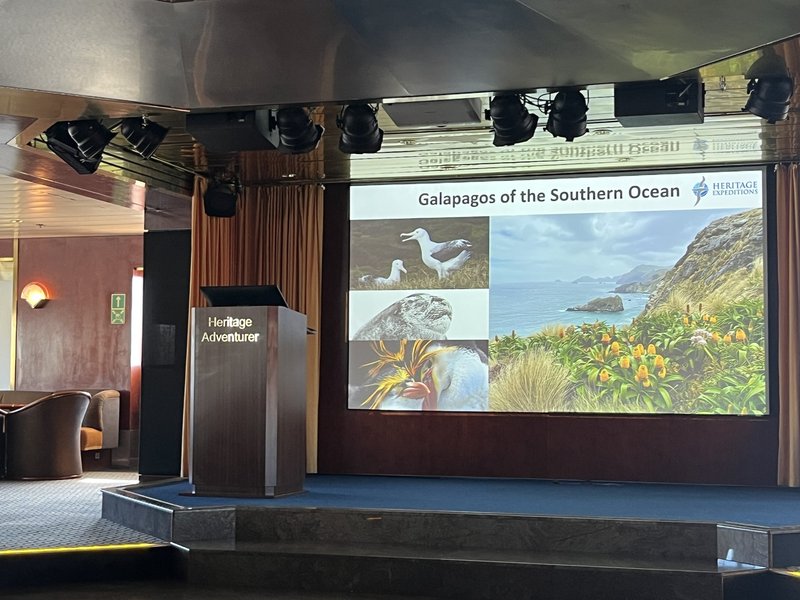
These aren’t the “first holiday abroad” kind of trips, it requires a significant investment in money and an above-average interest in wildlife watching. To state it boldly: you spend 12 days on a ship to be surrounded by penguins for 3.5 hours. You must be able to find joy in the other things along the way as well, such as seabirds, sea mammals like elephant seals, plants and talks about the region’s conservation history. There wasn’t much else in the way of entertainment, though my ship offered kayaking, which looked good.
Save up because there will be eyewatering costs all the way
It is going to cost a lot, so only try to make it happen when you are sure you have all the money together, plus another 20% or so to just not have to worry.
The only two major companies now offering dedicated cruises to the NZL Subantarctic Islands and Macquarie are Ponant and Heritage Expeditions – they have similar pricing, starting at 9,500 EUR for a bed in a 3-person cabin. There can be some discounts offered close to the departure date, but these are unlikely to be for the cheapest cabins. If you are under 30 years of age, you can apply for a scholarship to get on board for a seriously reduced sum. If you even have more money to spend, you can go for 15 nights as well, which also includes the 2 other Subs, Bounty and Antipodean Islands
In addition to the costs of the cruise itself and the international flights to get to the departure point in New Zealand, you need even more money to make it all happen:
- Fees: all conservation and landing fees should be included in your cruise cost, but the New Zealand and Australian authorities can decide to implement additional ones. Especially the New Zealand fees are on a sharp increase in the coming years. For this season, I had to pay an additional 184 EUR. At the end of the cruise, we were returned 65 USD as the New Zealanders had adjusted the fee downward.
- Insurance: for special evacuation insurance, I paid 82 EUR (see below).
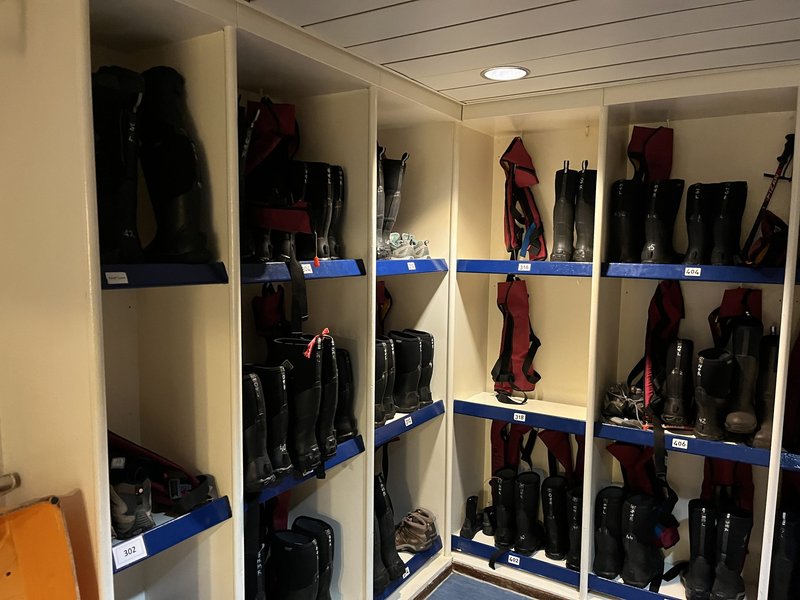
- Clothing and kit: there’s an extensive kit list in the pre-departure information, but I managed to refrain from buying anything additionally, guessing I would be OK with my clothes for a Dutch autumn (rain is more of a concern than cold). Rubber boots on loan during the trip were included in the cruise price and were very comfy.
- Wifi: vouchers for wifi on board using Starlink satellite communication cost 25 USD for 10 GB. They worked well everywhere. I went through two of them, even uploading a selection of photos to my Flickr account as backup and watching a TV show once.
- Drinks and other personal expenses: you have to pay for additional drinks taken outside lunch and dinner times, except for coffee and tea. My total ended up at a mere 4 USD (but I don’t drink alcohol). I spent 16 USD on laundry.
- Tips for the staff: the suggested amount is 15-20 USD per day, which makes 165-220 USD for 11 nights.
You’ll probably need special insurance
I usually travel only having my (global) health insurance and no travel insurance, but for a cruise like this, it is necessary to be additionally insured for rescue and medical evacuation. Rescue from the Subantarctic Islands can cost upwards of 150,000 USD, so the policy must at least cover that amount (few regular travel insurances will do so). The coverage must not only concern the cruise on the main ship but also the landings and the zodiac cruises.
Insurance is obligatory and you have to share the details with the cruise company. Eventually, I signed up with World Nomads – they are fairly inexpensive (I paid 82 EUR for 12 days). This included coverage for cancellation up to 10,000 USD as well, also not a bad idea at a trip of this cost.
Life on board
You will be getting a lot of Instructions
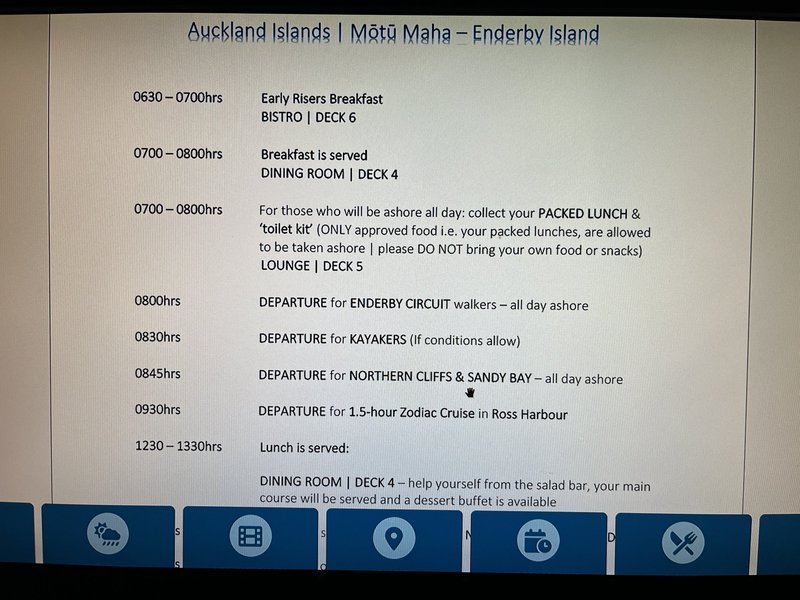
An expedition cruise like this is run almost like a boarding school. The Daily Program dictates where you have to be at what time. It has mandatory elements and fixed meal times. The onboard sound system, which reaches right above your head into your cabin, is used several times a day to call out for groups of passengers to do A or move to B. We had a mandatory full biosecurity check of all our outer gear three times: this means having it all inspected by a staff member, cleaning it when it still had a bit of mud on it from the previous island and only after that you were signed off. And of course, a lifeboat drill at the start.
Dealing with Seasickness
My personal theory based on this trip is that if you are susceptible to seasickness or motion sickness in general, based on day trip experiences such as whale watching, you will feel poorly on a cruise like this as well (unless you can suppress it with medication). Every day, there were at least a few people who stayed in their cabins because they did not feel well. On the other hand, if you are generally NOT susceptible to seasickness or motion sickness, you will probably be fine. I am in that latter category and only took a pill on the first night because the expedition team advised it (the swells were rough at the start of the trip). But I never found it necessary to repeat it. It is such a big ship, it feels very stable and there are plenty of windows to look out of and keep an eye on the horizon. I also had no issue working on my laptop for hours, only while reading a book, I found I got a bit nauseous.
Fellow passengers will be older lovers of nature and the outdoors
Despite the high cost, there was no one on board who was there just because he/she could afford it and went on luxury cruises all the time. The fellow passengers were all nature lovers, usually highly educated pensioners from countries like New Zealand, Australia, Japan, Sweden, Germany and the Netherlands. They did not mind getting wet or dirty from getting in and out of zodiacs or beach landings, and wore casual clothes on board all the time.
Could it be done less expensively?
I think the fellow passengers gladly would have traded a little less luxury for a lower price:
- The dinners in the Main Dining Room I found over the top (4 or 5 course a la carte, changing daily), since they feed you a 3-course lunch and full breakfasts as well. I think they’re competing with the more luxurious cruise liners here, but while the food was good and plentiful, it wasn’t gourmet cooking. It’s what a German cook would prepare for a group of healthy Western pensioners (safe, bland).
- The number of “freeloaders” on board seemed quite high: there were 20+ expedition staff, each to give about 1 presentation and hold someone’s hand while disembarking a zodiac. Plus, there were 12 people aged under 30 who had received a scholarship (a nice gesture, but would 6 not be the same generous offer?). Some others were family members or friends of the staff – did they get discounts? And there were some people on varied professional duty (counting albatrosses, updating the weather station) who got a ride but also enjoyed the food and excursions.
Would these two elements shave off 2000 EUR from the cost per person, to make it more affordable for everyone? I don’t know. But those would be my only criticisms of the company and this cruise – overall it was executed very well and I enjoyed my spacious cabin.
Have you ever been on a multi-day Expedition Cruise and have tips to add?
Comments
2 comments