
Time of the visit: the 25th of dec.,2025
Sungai Buloh Leprosy Settlement: The Self-Sufficient "Town of Hope"
Where is it? Sungai Buloh, Selangor (~25km from Kuala Lumpur). Can be excellently combined with the FRIM UNESCO whs and the spectacular Batu Caves.Yhe recommended route is 1.FRIM( easily reachable by public transport),2.Sungai Biloh,3.Batu Caves.Taxis are cheap in Malaysia,and from the Batu Caves I took one of the commuter trains back to the city centre.
Founded in 1930 they had their:
- Own Currency & Economy: It was a self-sufficient "model settlement." It had its own coins and tokens for internal trade within its shops, canteens, and cinema. This prevented money from leaving and boosted the local economy.
- Internal Prison: It had its own lock-up to discipline residents who broke colony rules, making it a truly autonomous mini-society.
- World-Class Nursery: Famous for its orchid and ornamental plant nursery, run by patients. It became a major commercial exporter and a popular weekend destination for the public to buy plants, even attracting royalty.
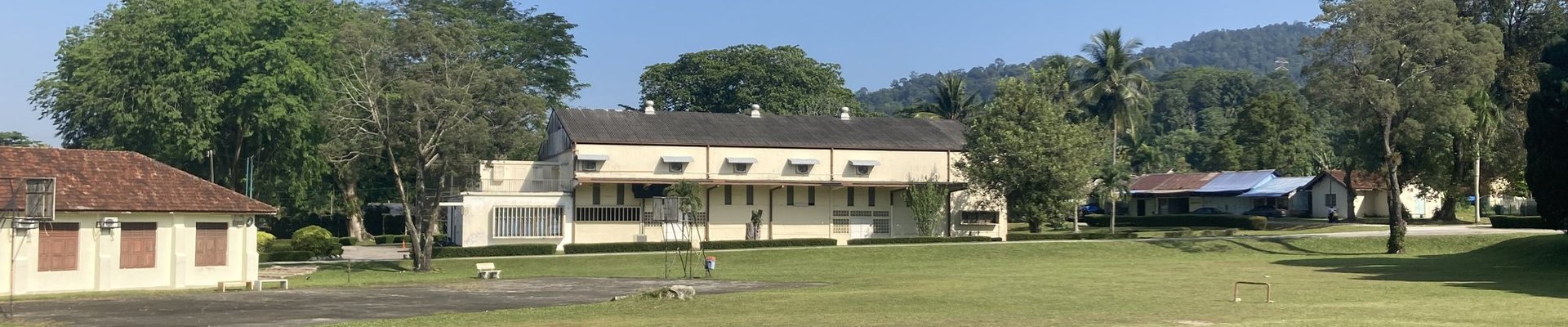
- Still Popular Today: The heritage site and museum are visited for history. More notably, the plant nursery tradition continues. The Sungai Buloh Nursery Centre (just outside the old settlement with it's neglected and abandoned buildings, I came across an old man in one of the buildings,had almost a heart attack as he was just sitting on the ground) is still hugely popular with locals and gardeners for its wide variety of affordable plants, making it a direct living legacy of the settlement.Of course almost all of today's visitors are there because of said nurseries(the so-called Hee Gardens).The garden cafe there is absolutely recommendable... delicious cakes, good coffee sitting among plants...great place to sit and wait for your grab taxi).A small part of the colony 's old heart is fenced off and there are still a dozen descendants of the former patients living there.I had a chat with a young guard there.His English was broken.He allowed me to enter that small area but I didn't go into it as I felt like an intruder. There is also a museum in the core zone as well as some community buildings. I also visited the church,the Moslem graves and a Chinese temple in the nursery. The leper colony had more than 600 buildings and almost 2500 inhabitants of diverse ethnic backgrounds in its peak days. There are still quite a lot of buildings in the nursery area.... partly destroyed, partly inhabited by descendants of former patients, partly abandoned, partly used as deposit stores.Be warned that the abandoned heart of the colony is not for the faint- hearted.I came across stray dogs,a strange old man,cats , abandonded shoes,a painting in an empty building ..surreal. A little bit spooky.Reminded me of my visit to Chernobyl in a certain way.Of course I put my long nose into every building there.Apart from that old man nobody was inside the former colony 's heart.
First, the concept of Outstanding Universal Value (OUV) for such sites is not necessarily about pristine preservation, but about authenticity and integrity in conveying their powerful story. Ruins or transformed sites can still hold immense OUV if their message remains legible. And I for one would wholeheartedly welcome a serial nomination with other former leper colonies around the globe.
Potential sites are probably the Culion Leprosy Colony in the Philippines,the biggest one in the history of us human beings.Our fellow member Bernard Guerrero mentioned that almost nothing is left there.The Kalaupapa Settlement on Hawaii, USA,the Spinalonga Island in Greece,the Sorokdo Island Settlement, South Korea,and the Fontilles Sanatorium in Spain
These sites, when looked at together, could probably tell a powerful global story about a difficult but shared human experience:
- They are important as a group because they stand as strong reminders of a difficult part of history that happened all over the world: how societies isolated people to try and stop the spread of contagious diseases.
- The different sites show how ideas about isolation changed over time. Early sites used natural isolation, like remote peninsulas or island fortresses. Later ones, like Sungai Buloh, were scientifically planned as self-sufficient "garden communities" meant to help heal patients.
- Most importantly, these places honor the lives and experiences of the patients who lived there. They tell stories of community, hardship, strength, and the slow journey towards ending stigma and moving care back into society.
- Listing them together would show how this chapter of history took different shapes across the world, influenced by local cultures and landscapes—from islands and mountains to mainland settlements.
Sungai Buloh is an outstanding example of the later, more modern idea of a planned therapeutic colony. Including it with older colonies from other parts of the world would create a much stronger and more complete World Heritage story IMO. Together, they would tell the full story of our shared past: a story of fear and separation, but also of perseverance and human dignity.And let's not forget that the word "leper" caused fear and terror among numerous generations up to a few decades ago. That word had a different meaning for my grandfather than it has for me.
Sungai Buloh, as a premier example of a 20th-century, scientifically planned "garden city" colony with its innovative economic and horticultural therapy, would be a cornerstone of such a transnational serial nomination. Its inclusion with other colonies would create a powerful, multifaceted World Heritage property telling a complete story of the leprosy which evoked terror and fear among countless generations of human beings.
I had only visited one other leper colony before: the Losheng Sanatorium in the outskirts of Taiwan's capital Taipeh as it is listed as a potential future whs by Taiwan's government.
Difficult case.I had difficulties in finding the concrete site and asked a casual passerby.He turned out to be one of the responsible ingenieurs for the renovation of the remaining buildings.He showed me the site the area being under renovation and allowed me to roam it freely.
This is one of the most politically charged and tragic heritage stories in Taiwan. Much of the original sanatorium complex was demolished in the 2000s to make way for a metro depot and maintenance yard. A compromise was reached after massive protests by residents, patients, and activists. A small portion of the historical buildings (about 10-15%) has been preserved and restored as the "Losheng Sanatorium Museum".The rest is lost. Everything seemed sterile and overly renovated.There were still some 4-5 run-down buildings separated by a small street from the renovated part with a handful of inhabitants.I greeted an old man who looked out of a window.He could only speak Chinese. My translator app was of no use as he seemed mentally disturbed.The integrity was very low. The site is fragmented, with its original geographical and functional integrity destroyed. While the preserved core tells the story up to a very limited degree, it is a small remnant overshadowed by the metro infrastructure and the huge buildings of the modern clinic there.Losheng' s physical fragmentation makes it a very weak candidate for the core serial list compared to sites with higher integrity like Sungai Buloh.
The path to nomination is long, but the thematic foundation for a powerful, globally significant serial site is undoubtedly there.
Both my thumps go up.
Comments
No comments yet.