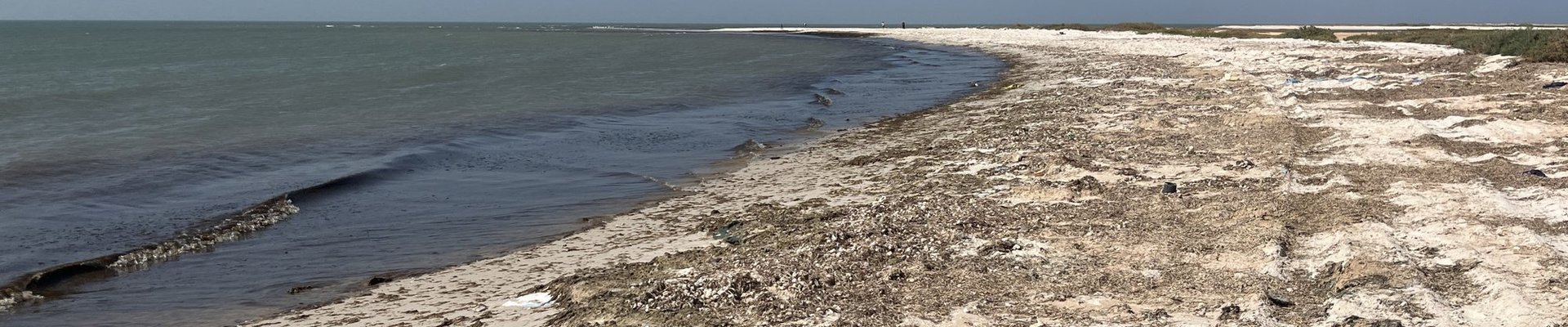
Mauritania’s Banc d’Arguin NP is rarely visited and has only been reviewed once, about 18 years ago. However, this is the number one place for waterfowl and migratory waders among the several "bird WHS" along the West African Coast. It is “better” than Djoudj and the Saloum Delta, and only the 2025 nomination of the Bijagos Archipelago in Guinea-Bissau comes close, but it still has only 50% of its numbers. We spent a full day and a night in its core zone, stretching 170km along the Atlantic Coast.

The Banc d’Arguin is so rich because it lies next to an ocean upwelling that produces nutrient-rich cooler waters. This sets a whole food chain of phytoplankton-filter feeders-fish-birds-marine mammals in motion.
We approached it from the South, driving for 2.5 hours from the capital Nouakchott. This is mostly a good paved road, where our drivers even clocked 130km/h. The surrounding landscape is rather featureless, though you will see some dromedaries roaming around. We made a first stop at Mamghar, one of the seven fishing villages inside the park. The smell of fish is predominant here: the people leave their gutted fish drying out on the fences surrounding the corrals for the goats.
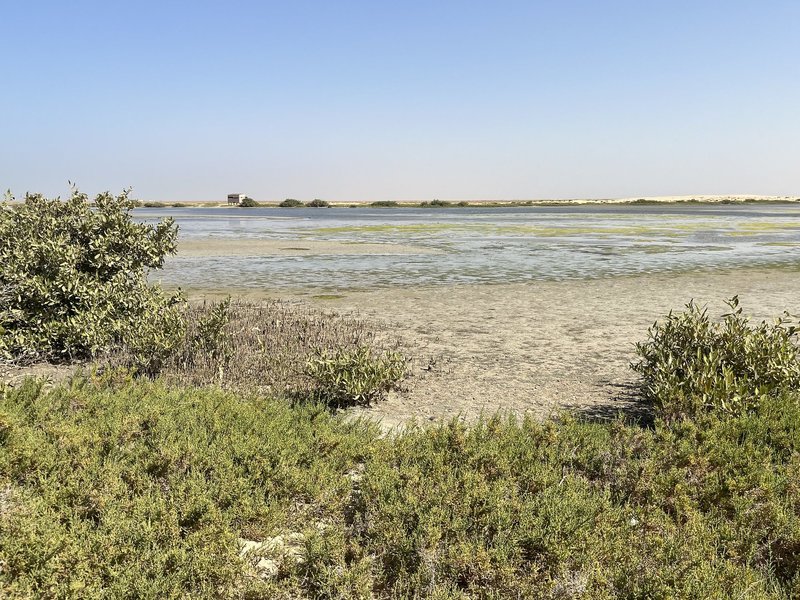
On the outskirts of town, you can walk onto the seabank and observe bird colonies that have found their nesting or resting spot right there. We saw two sandbanks right offshore, fully covered by a variety of bird species, including larger ones such as pelicans. A bit more inland, there are lakes surrounded by green bushes (a rare sight here in the desert) and there is even a bird hide. It was a fine short visit, but when you’re a serious birder, you really need to allocate more time to this park – you can go on full-day boat trips to sand banks further away.
After an hour, we drove North, taking the great beach road and sometimes diverting a bit into the dunes. It’s very windy along the coast and the weather has created shell middens and finely carved sand dunes.
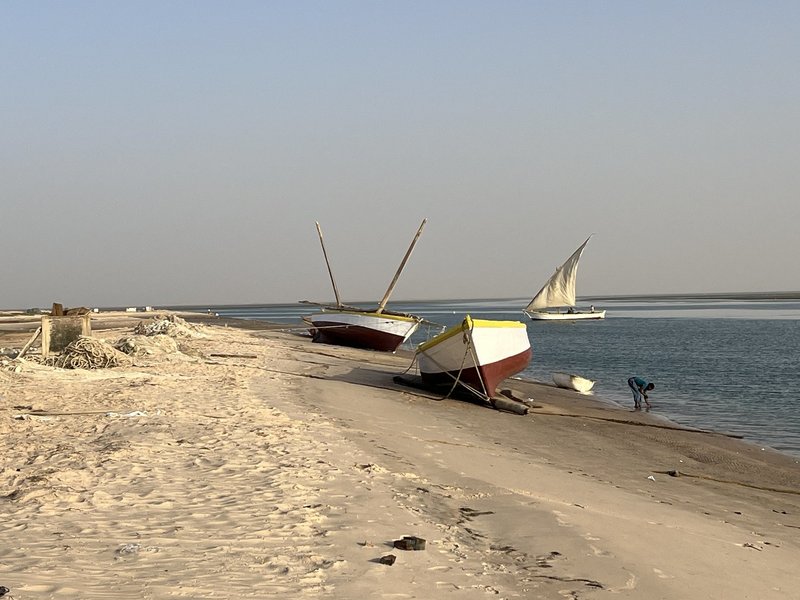
We overnighted in a permanent camp near Iwik, which is run by a local cooperative. The living conditions in this fishing village, built out of shipping containers and wooden sheds, look very tough, as it gets very hot out here and there are hardly any amenities. We could admire the works of the fishermen though, preparing their tall wooden sailing ships for another morning at sea.
The next day, we drove another 1.5 hours North through the park. In this area, you can clearly see the offshore sandbanks – they look a bit like icebergs floating by in the ocean (see photo below, the white bit in the distance); to me, it’s the most characteristic image of this WHS.

We also visited Cap Blanc, about 4 hours from Iwik, which is labelled in the official documentation and at its visitor centre as a ‘satellite site’ to Banc d’Arguin NP, but has been excluded from the final inscription on the instigation of IUCN because of border issues. It comprises the Mauritanian part of the peninsula that protrudes into the ocean from the city of Nouadhibou. You need to pass through the very busy port area, where the infamous Iron Ore Train arrives. Just on the tip, there’s a nature reserve, not much more than a small but pretty beach. Its pride was the colony of rare monk seals, but they all - except for 1 or 2 that still come by occasionally - have migrated to the Western Saharan side of the peninsula as it is much quieter over there.
Comments
2 comments