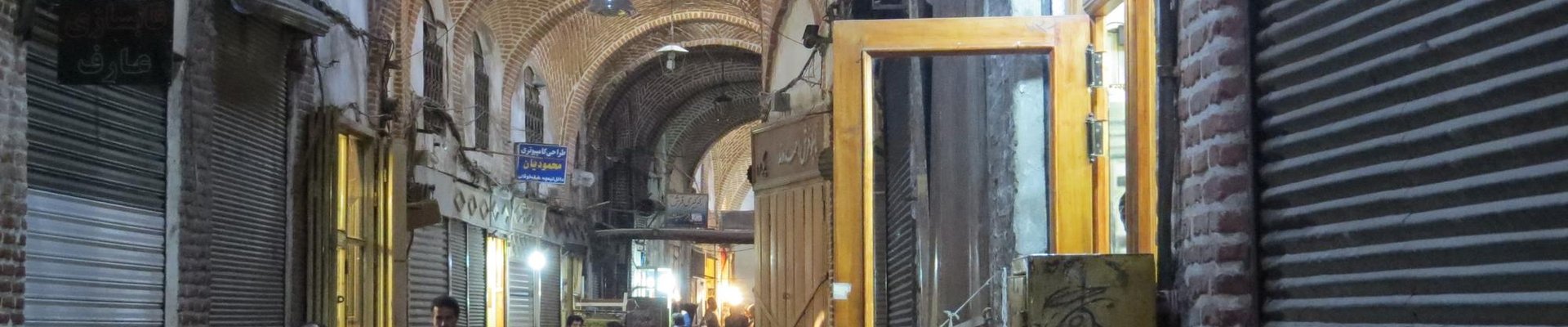
The Tabriz Historic Bazaar Complex has been declared a WHS because of its original layout and architecture. The nomination file goes into extreme detail about Iranian bazaar types and customs; this apparently is “a central bazaar with radial gate-bazaars”. The 3 inscribed locations are the Grand Bazaar and 2 of the remaining secondary bazaars. It’s also one of the oldest bazaars still in use: Tabriz was already a bustling town in the 13th century, when it was an important commercial stop on the northern route of the Silk Road through Iran.
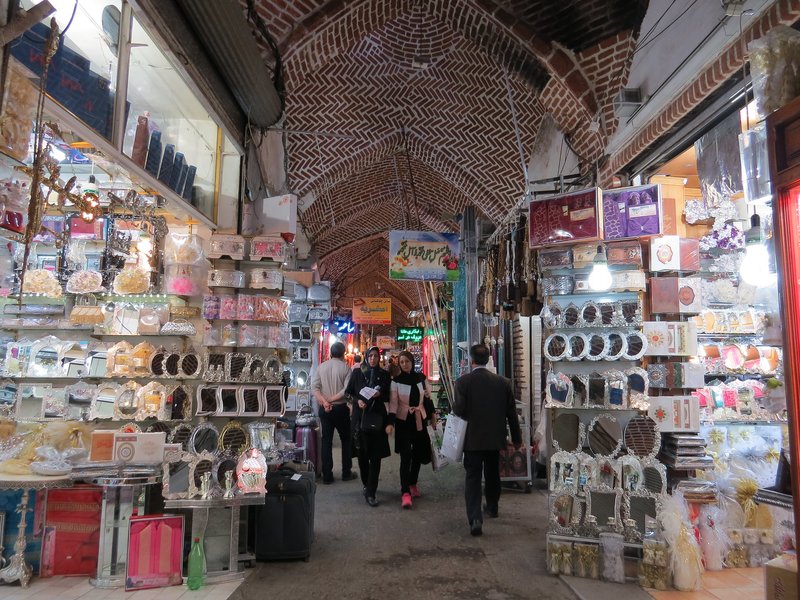
We arrived at the Grand Bazaar late in the afternoon. It still is a popular shopping district in this city of 1.5 million inhabitants, and many shoppers were about. Both modern necessities such as kitchen utensils and traditional goods, like nuts and spices, are sold. The figs especially are to die for, soft and sweet - nothing like the dried-out objects you’ll find in supermarkets in Europe. Despite the bazaar’s age, it does feel quite modern and not as atmospheric as for example the medinas of Fez and Marrakech. People in my tour group who had been to Aleppo, the most similar WHS because it’s also a covered bazaar, preferred that one over Tabriz, too.
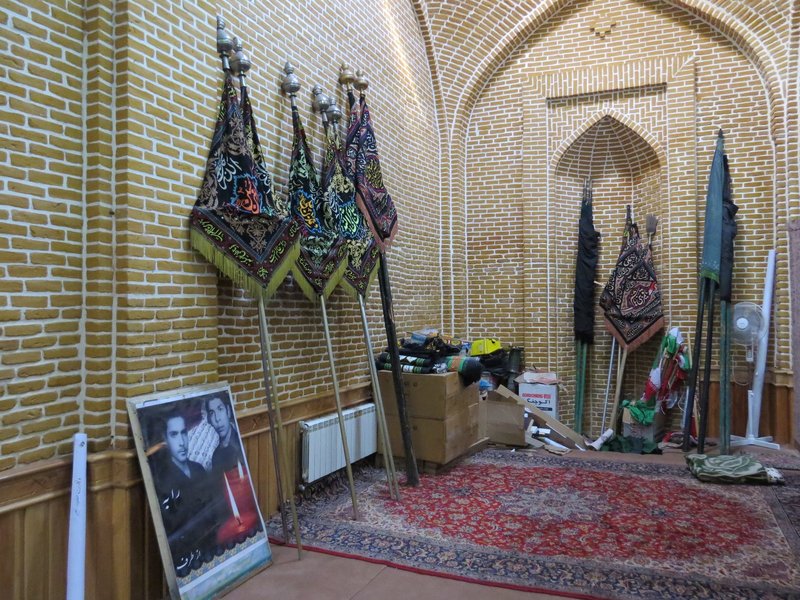
In the bazaar’s back alleys and behind closed doors, there is more to discover than appears at first sight. The bazaar not only has a commercial function, but it also provides a social and religious one. We had a quick look at a huge covered caravanserai (timcheh). And we visited a sizeable, brick-vaulted Shia mosque. Behind a curtain, we found some black ‘Ashura’ banners, used for the most important religious day in Iran. It’s the festival known for its bloody self-flagellation rituals, although this is discouraged in modern Iran.
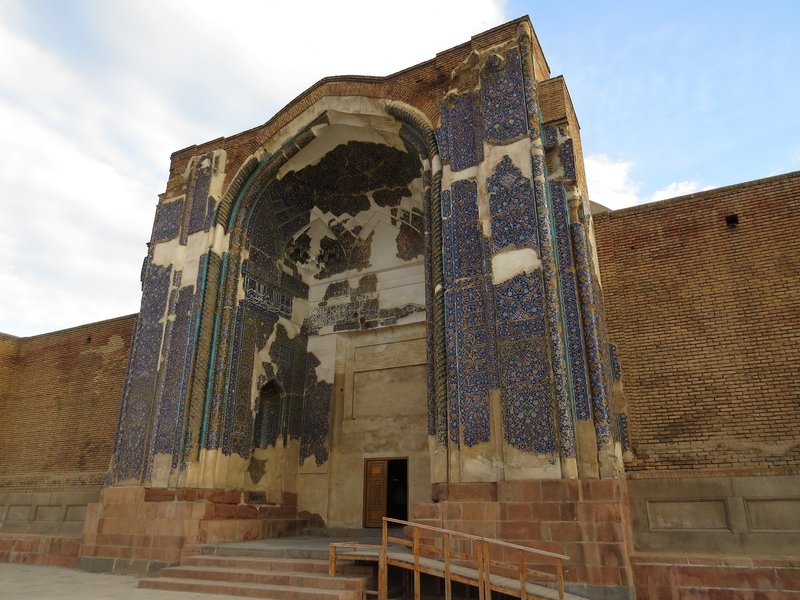
Within the protected area of the Bazaar complex also lies the ‘Blue Mosque’ (which also mysteriously still features on Iran’s Tentative List). Looking at the UNESCO map, it seems indeed connected to the Grand Bazaar, but in practice, it requires a taxi ride from the bazaar to get to this mosque. Its renovated brick backside faces the main street, but when you walk around it, a monumental gate like that of the masterpieces in Uzbekistan appears.
This mosque was built in the style of the Mongolian Timurid dynasty in the second half of the 15th century. Tabriz was at that time the capital of East Persia. The mosque has suffered badly during the past; an earthquake in 1779 largely destroyed it. In 19th-century sketches made by passing European travelers, it is shown as virtually a ruin. Since then, much brickwork has been added to make it whole again. But it is far from finished – according to our guide, there is disagreement about how to proceed.
Although certainly worth a visit for a couple of hours, Tabriz Bazaar was the least exciting of the 6 WHS that I visited during my tour of Northern Iran. But the name ‘Tabriz’ for me will forever be connected to the ‘Tabriz meatballs’. Ordering this from the menu in a touristy restaurant in Tabriz’s Luna Park, I expected to get something like kofta. But this is one big ball of ingredients, filled at its core with egg and chicken. With some difficulty, I managed to eat half of it.
Comments
No comments yet.