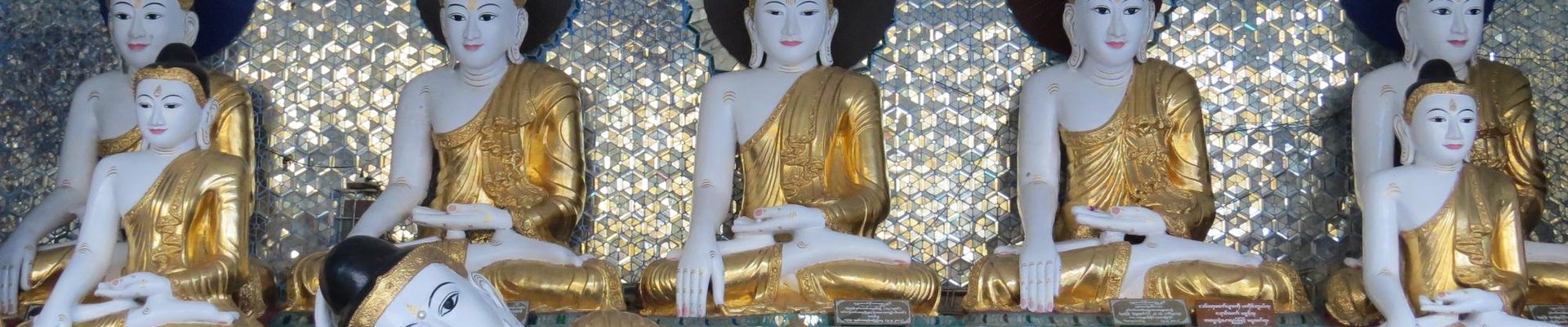

More than ten years have passed since I first set foot at the majestic Shwedagon Pagoda in Yangon, Myanmar. That first visit remains vivid in my memory: an afternoon drenched in sunlight, alive with devotees performing rituals, the fragrance of incense drifting through the air, and rhythmic chants echoing across the terrace. Tourists mingled with worshippers, all drawn upward to the sacred hill crowned by a vision of gold. The pagoda rose like a jewel above the city, its unique architecture radiating devotion and cultural depth. It was an encounter that left a lasting impression on my heart.
This time, I returned in the evening, and the experience felt entirely different, yet equally profound. Most of the tourists had gone, their absence reflecting the long shadow of political unrest and civil conflict that has kept many foreigners away in recent years. The vast grounds were left largely to local worshippers, who moved quietly in prayer and contemplation. As daylight faded, the pagoda began to transform. Candlelight flickered along the walkways, and powerful spotlights bathed the great stupa in a luminous glow. Against the darkening sky, Shwedagon no longer seemed merely monumental but almost otherworldly, a golden mountain suspended between earth and heaven. Standing there in the hushed night, I felt an enveloping sense of calm and spiritual grandeur.
What made this visit especially meaningful was the company I kept. I was accompanied by archaeologists and art historians whose insights revealed layers of meaning I had never noticed before. Through their explanations, Shwedagon emerged not only as a sacred site but as a masterpiece of architectural thought. Its design is rooted in the Mon tradition, which developed along a path distinct from the later Burmese stupa forms shaped by Pyu and Bagan influences. Unlike stupas derived from Sri Lankan or Indian prototypes, Shwedagon has no clear division between body and spire. Its form rises seamlessly, a continuous ascent that is both visually powerful and structurally ingenious. This unified design is believed to provide greater resistance to earthquakes, a quiet testament to the wisdom of its ancient builders.
Over centuries, Burmese kings and patrons enriched Shwedagon, gradually blending Mon foundations with Burmese aesthetics into a harmonious whole. This evolution sets Shwedagon apart from Shwemawdaw Pagoda in Bago, which still preserves a more purely Mon style. Shwedagon, by contrast, has become a national symbol, its commanding presence near Yangon amplifying its cultural and spiritual significance. Yet even without its political or geographic prominence, its beauty alone would be enough to inspire reverence.
Our conversations eventually turned to the question of whether Shwedagon Pagoda might one day be proposed as a UNESCO World Heritage Site. When I raised this with the archaeologists and art historians, most welcomed the idea and agreed that Shwedagon is unquestionably worthy of such recognition, both for its architectural distinction and its immense spiritual gravity. Yet their enthusiasm was tempered by unease. Preservation at Shwedagon is not governed by static principles but by living faith. Care and repair are acts of devotion, not exercises in restraint. The pagoda is continuously renewed according to local understanding, shaped by merit making rather than by the logic of historical fixity. The ritual recoating of the stupa in gold leaf every five or six years, is itself a sacred practice. To subject such acts to external regulation could place conservation in quiet opposition to belief. There was also concern that oversight by a non Buddhist international body might be perceived not as protection, but as interference, disrupting a relationship between monument and worshipper that has endured for centuries. As I listened, I sensed a familiar dilemma, one echoed at Sri Harmandir Sahib in Amritsar, where the demands of global heritage frameworks must constantly negotiate with the rhythms of living religious tradition.
During my days in Yangon, I caught glimpses of the pagoda again and again, rising above streets and rooftops, always shimmering, always present. But the most unforgettable view came at the moment of departure. As my plane lifted into the night sky, I looked down and saw Shwedagon one final time. Its golden glow pierced the darkness like a beacon. In that quiet, fleeting moment, I felt a surge of hope that this radiant monument, enduring through centuries of change and hardship, might continue to illuminate a brighter future for Myanmar.
Comments
No comments yet.