Wojciech Fedoruk
Oldest Monasteries in the World
The monasteries of the Arab Desert and Wadi Natrun (On tentative list)
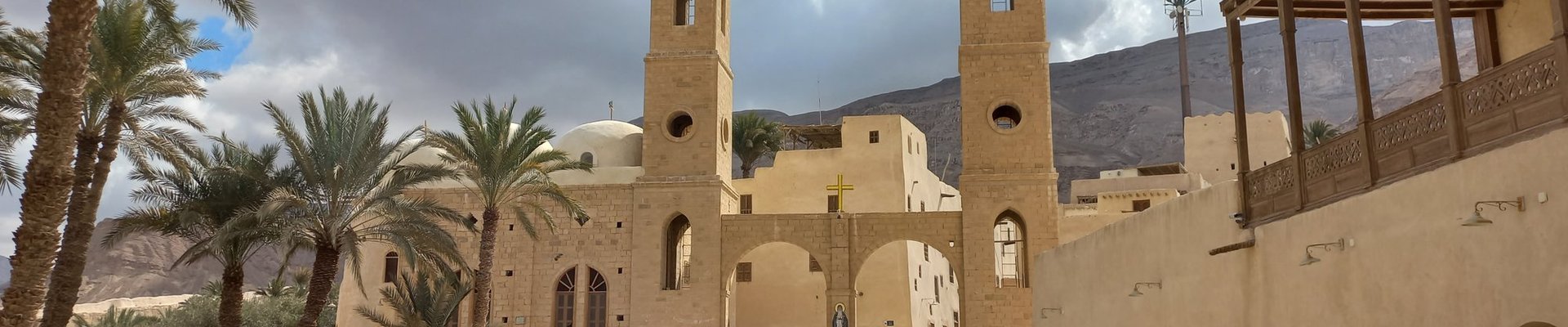
Of the six monasteries under this proposal, me and my family visited three, two of them in Wadi el-Natrun - St. Bishoy Monastery (Deir Anba Bishoy) and Monastery of Romans (Deir al-Baramus) and one in the Eastern Desert (Monastery of Saint Anthony). The Syrian Monastery, right next to Bishoya, is only open on Fridays, so we were not able to visit it.
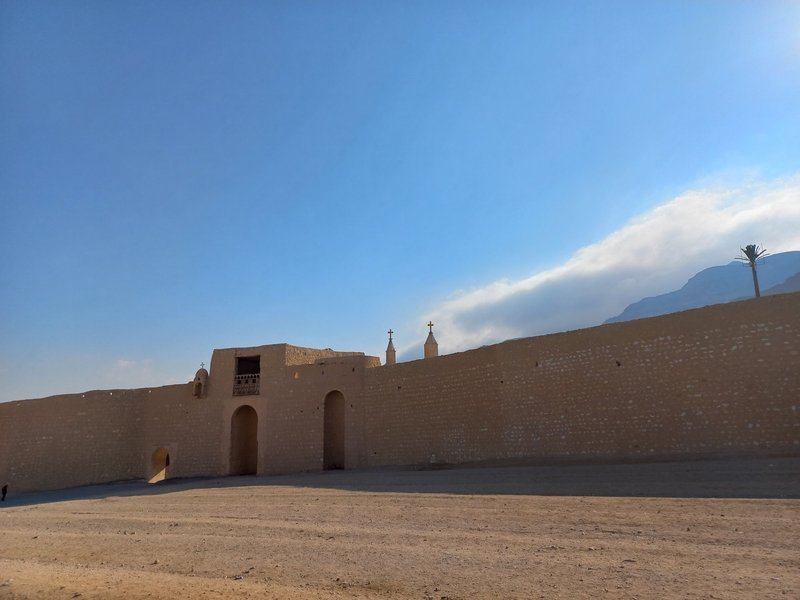
As the previous reviewers have already described the monasteries of Wadi el-Natrun, I will concentrate on the less accessible St. Anthony Monastery. To the monastery leads a great and completely empty road connecting Bani Suwayf with Sokhna.
The place was founded by St. Anthony, the first of the Desert Fathers, in the third century AD and is the first monastery in the world, existing in the same place to this day! St. Anthony went into the desert to devote himself to contemplation and meditation, but his fame attracted crowds of young men who wanted to follow in his footsteps. To frame the newly formed community, St. Anthony developed the world's first monastic rule. St. Benedict and St. Hieronimus, drawing up their own monastic rules and creating the first monasteries in Western Europe, took their ideas from St. Anthony. The establishment of monasteries had a deep meaning after Christianity was made the state religion of the Roman Empire at the beginning of the fourth century - it was no longer necessary (and there was no opportunity) to die for the faith, so monasticism filled the gap in those who wanted to devote themselves fully to the spiritual life. Therefore, the influence of St. Anthony on the fate of the world cannot be overestimated.
The visit to the monastery itself was extremely pleasant. We arrived there at 9.00 in the morning, when the mass was still going on and a monk who spoke great English recommended us to go to the grotto of St. Anthony – a place where the saint spent a lot of his life meditating. The grotto is located in the complex, but to get to it, you have to overcome over 1200 steps! It is difficult to say whether climbing pays off – for sure the view from the top is beautiful, but the grotto itself is tiny, with a small altar inside. In winter, at 20 degrees it was a pleasant walk and took us about an hour both ways. In the summer, at 30 or 40 degrees, it must be a nightmare.
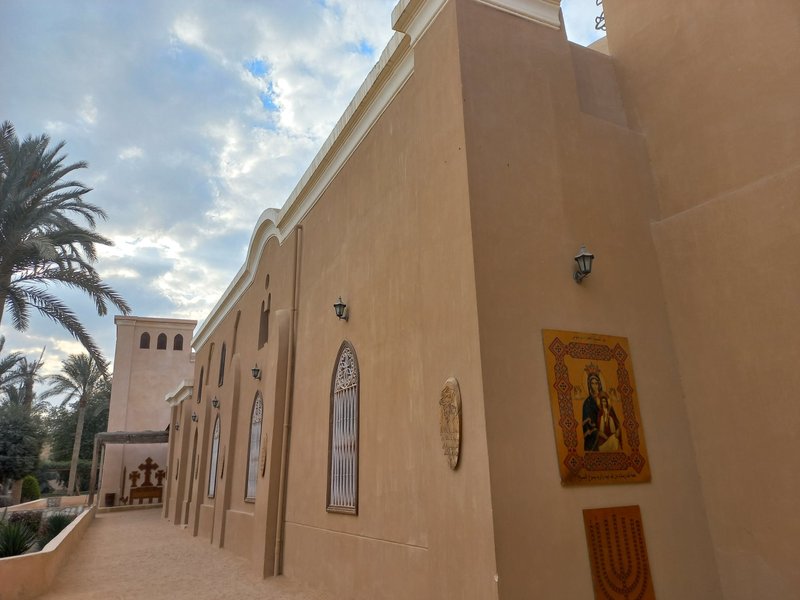
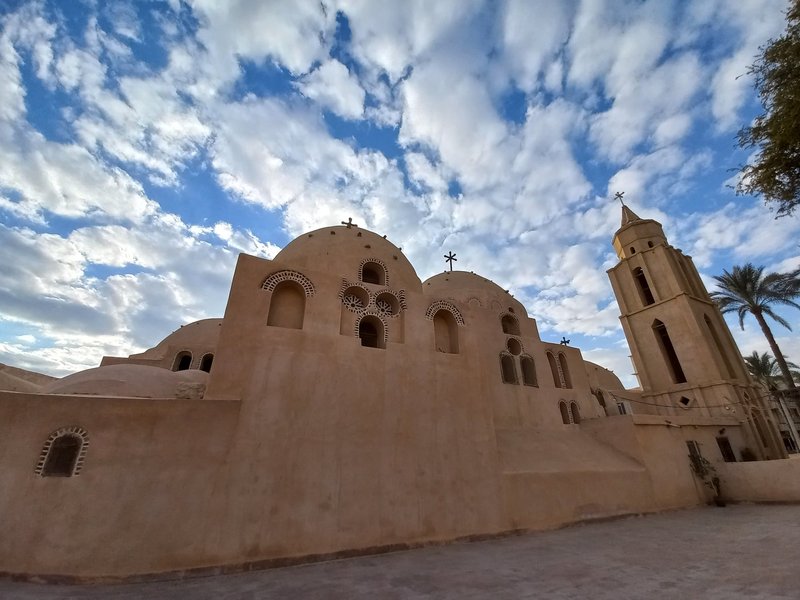
We returned to the monastery, waited another hour and finally got our queue when the monk guiding the tourists finished with the previous group. The monastery is surrounded by a high wall that once protected against barbarians. The central point is of course the church, the oldest part of the complex which dates from the fourth century and under whose altar – as it is commonly believed – St. Anthony himself is buried. The old church was enlarged a few centuries later and contains magnificent icons from the thirteenth century.
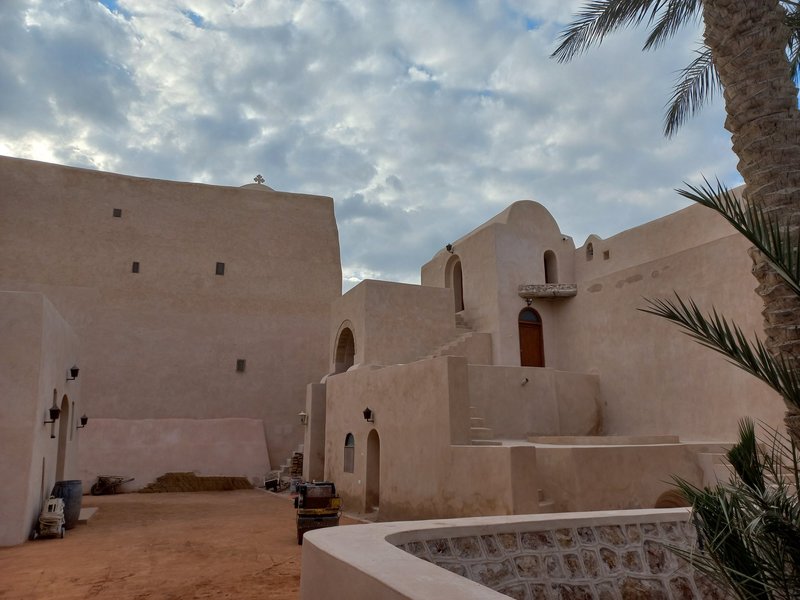
In addition to the church, there is a tower without doors from the eighth century, in which monks hid during barbarian attacks. The only entrance to the tower is at the level of the second floor from another building, through which the monks passed, took a ladder and bolted the door. There are also farm rooms where there are original querns from the eighth century. There are also monks’ cells, but this building is much younger, from the nineteenth century.
It is worth adding that other monasteries in Wadi al-Natrun are organized in a similar scheme (defensive walls, old church, tower without doors, farm rooms and monks' cells). However, there were no guided tours and we walked around the monasteries on our own.
I believe that this proposal should be included withoutout any doubt. Moreover, after visiting the monastery of St. Anthony, I think that this is one of the top missing sites.
Comments
No comments yet.