Connected Sites
-
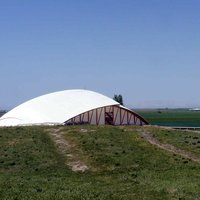
Cattle Domestication: In the 1960s the excavator James Mellaart and zooarchaeologist Dexter Perkins Jr. argued that Çatalhöyük was a primary site for cattle domestication. They based this on the massive importance of cattle in the site's art and a perceived reduction in bone size over time. It is now believed that for the first 1,000 years of occupation, the cattle at Çatalhöyük were morphologically wild aurochs - massive, hunted animals used primarily for ritual feasting rather than daily dairy or labor. Small-bodied, clearly domesticated cattle appeared abruptly in the later levels (roughly 6300–6000 BC) suggesting that they were not domesticated locally but were imported from other regions (likely the Levant or Southeast Anatolia) where domestication had already occurred. (source)
-
Prehistoric movement of domesticated animals
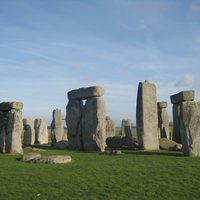
At Durrington Walls, UK, massive deposits of pig and cattle bones have been excavated. Isotope analysis of teeth from c. 2500 BCE revealed that animals were being walked to the site from as far away as Highland Scotland and Wales, and that almost all were killed at 9 months of age, pointing to a mid-winter slaughter (The Winter Solstice). proving that the site served as a pan-British focal point for seasonal ritual feasting. (source)
-
Shaping the Delta.
Archaeozoological evidence has been significant in defining or advancing understanding of this site's place in history via a 2,000-year-long sustainable economy that physically reshaped the delta into stable, inhabitable islets consisting of 218 man-made shell mounds between c. 400 BCE–1600 CE. "an eminent example of traditional human settlement. It represents a lifestyle and sustainable development based on the gathering of shellfish and fishing, in a considered interaction with a natural environment of extensive but fragile biodiversity." (OUV)
-
The Emergence of Modern Human Behavior. At Sibhudu Cave bone implements such as a small arrowhead have been discovered dating back to c 61000ybp (The Middle Stone Age). A range of other findings have suggested a range of technologies in place at that time such as the use of snares and needles to stitch animal hides, showing the earliest "modern human behaviour and complex cognition (requiring) abstract thinking, the ability to plan and strategize, and technological innovation" (OUV) (source)
-
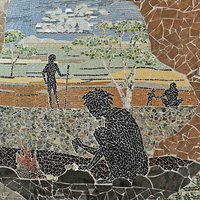
Man as Hunter or Scavenger? Since the 1930s Zhoukoudian has been the subject of debates on the nature of its human/animal; occupation/use including sharing with hyenas and the extent to which it provided evidence of systematic hunting of deer and the controlled use of fire for cooking animal meat. Modern zooarchaeology at Zhoukoudian reveals that the site was primarily a giant hyena den where Homo erectus were occasional scavengers and even prey, rather than master hunters" These 2 significant articles are both available on the Web - Binford, L. R., & Stone, N. M. (1986). "Zhoukoudian: A Closer Look." (Current Anthropology), Boaz, N. T., Ciochon, R. L., et al. (2004) and. "Mapping and taphonomic analysis of the Homo erectus loci at Locality 1 Zhoukoudian, China." (Journal of Human Evolution)
-
Hippo Butchery
The site provides evidence that, 850,000 ybp Homo Erectus was systematically processing large megaherbivores. This discovery shifted the narrative of early humans from opportunistic scavengers to coordinated hunters capable of exploiting challenging environments. "The Gombore II-2 site, also known as the “Butchery site” is later in age and lies higher up in Gombore gully profile. It is also located 30m south of Gombore II Open Air Museum. The Gombore II-2 “butchery site’’ was first tested in 1974, and later excavated in 1993 and 1995. The site was interpreted as a hippopotamus butchering site" (Nomination file)
-
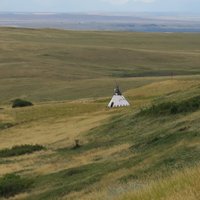
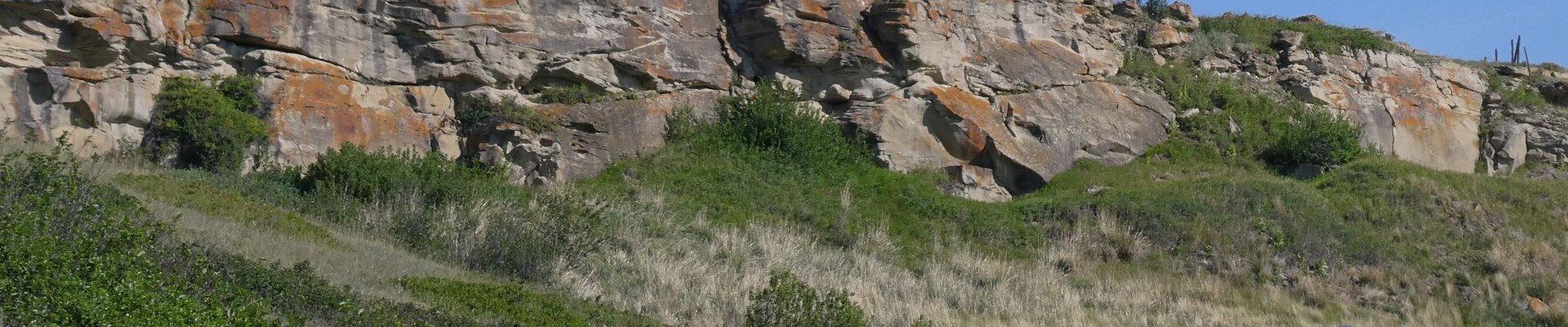
Organised Bison Hunting: "One of the oldest, most extensive and best preserved sites that illustrate communal hunting techniques and of the way of life of Plains people who, for more than five millennia, subsisted on the vast herds of bison that existed in North America." (OUV Crit ii) Stratified bone beds of American bison reaching 10 meters in depth; radiocarbon dating of the oldest layers (c. 3800–3100 BCE) provides the primary evidence for 6,000 years of communal hunting and industrial-scale butchery.
-
Rabbit Farming
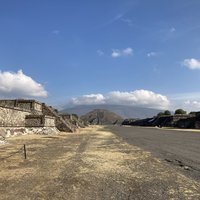
These have been shown to be a major part of the city dweller diet. "The ancient city of Teotihuacan, Mexico (AD 1–550) provides one of the best case studies to understand intensive human–leporid interactions in an urban landscape.....The best evidence for rabbit captivity and breeding within the city of Teotihuacan was found within a residential apartment complex in the northeast of the city (N6W3) called Oztoyahualco (Manzanilla, 1993). The archaeological, zooarcheological, and isotopic data suggest household level captive breeding of rabbits not only provided a reliable source of proteins, lipids, and fur to their residents, but was also specialized economic task that generated a surplus to be sold/traded." (source)
-
Prehistoric Pile Dwellings
Austria, France, Germany, Italy, Slovenia, SwitzerlandInscribed: 201125817
Preserved environmental records
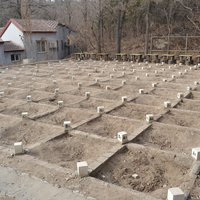
Archaeozoology at these sites has provided high-resolution data on human survival and environmental adaptation in the area between c5000 to 500BCE. The nomination file contains several references to the importance of Archaeozoology to an understanding of the site and the wider area e.g this section "Archaeobiology and Archaeozoology - The excellent preservation of organic material provides exceptionally good conditions for studies of the economy of early farming societies. Archaeobotanical and archaeozoological studies of the botanical and faunal macro-remains are standard for the research of pile-dwelling settlements and allow conclusions about the economy and the environment. Not many other types of sites in Europe have preservation conditions as favourable as the pile dwellings. This applies to bones of mammals, birds, amphibians and fish" (Nom file p 92)
-
Long term Human/Fauna Interaction:
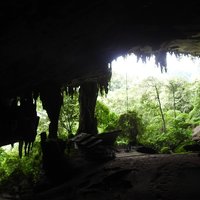
"Niah has produced one of the oldest and longest well-dated records of an anatomically modern human presence in Southeast Asia, extending from the Late Pleistocene (c. 50 Ka) to the sub-recent. The archaeological investigations have also led to the recovery of one of the most substantial collections of well-preserved vertebrate skeletal remains ever recovered in the region. The potential of this resource was recognized early, and in 1961, Tom Harrisson wrote a seminal piece for Malayan Nature Journal describing how human populations had impacted on mammal communities inhabiting the forests around Niah throughout prehistory. In the following decades, zooarchaeological research at Niah has continued to play a pivotal role in developing our understanding of Southeast Asian prehistory" (source)
-
A "Hunter-Gatherer" ritual feasting site.
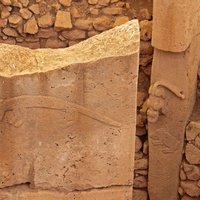
Substantial amounts of bone exclusively from hunted wild animals (primarily gazelle and aurochs whose bones have been dated to c. 9500–8000 BCE) and an inventory of stone tools comprising a wide range of projectile points have been retrieved from the site. Investigations of the bones and botanical remains have shown that animal husbandry was not practiced there and that domesticated plants were unknown. The people creating the megalithic monuments at GT were therefore still highly mobile hunter-foragers, gathering there prior to the domestication of animals, for massive organized and ritual communal feasts . (source)