Connected Sites
-
The entrance to the Old Town Hall features iron bars used to define the Schuh, Elle and Klafter. (link)
-
On the terrace of the Hall of Supreme Harmony in the Forbidden City (Beijing), there are massive bronze vessels known as Jialing. These were the official imperial volume measures. (link)
-
At the base of Orlando's Column in the Luža Square, a precise line is carved into the stone step. Known as the Dubrovnik Ell/Ragusan Cubit (lakat), it measures exactly 51.2 cm. For centuries, every bolt of fabric traded in the Republic of Ragusa had to be checked against this mark. To reinforce the standard, the forearm of the statue of Orlando was carved to the same length, placing the "measure of the law" in plain public view. (link)
-
To the left of the main entrance of St. Stephen's Cathedral, two iron bars are permanently bolted into the stone. These represent the Vienna Ells—one for linen (89.6 cm) and one for wool (77.6 cm). Behind the bars, deep grooves are worn into the cathedral’s limestone, caused by generations of merchants rubbing their measuring sticks against the iron to verify their accuracy. (link)
-
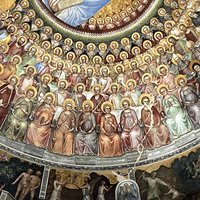
Under the arches of the Palazzo della Ragione, in the "Canton delle Busie" (Corner of Lies), official standard measures for cloth, bricks, and tiles are carved into the white stone. These were used to resolve disputes in the market that has operated in the surrounding square for 800 years (link)
-
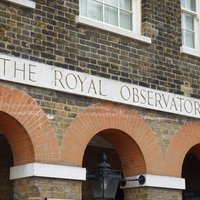
Outside the gates of the Royal Observatory, a set of brass plates is permanently fixed to the wall. These are the Public Standards of Length, including the British Yard, Two Feet, and One Foot. Installed in 1866, they allowed the public to calibrate their own instruments against the national standard. (link)