Connected Sites
-
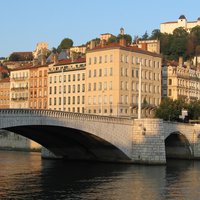
The Palais de la Bourse (1855–1860), in Second Empire neoclassical style, housed Lyon’s stock exchange and “Corbeille” trading pit for securities and silk finance, its ornate halls reflecting industrial prosperity; it now serves the Chamber of Commerce for events, Embodied industrial ambition. Accessible externally with interior entry possible during organised events or rare tours. (wiki)
-
The Lonja del Comercio, an imposing eclectic/Renaissance-style building with a prominent dome topped by a bronze Mercury statue, constructed between 1907 and 1909 on Plaza de San Francisco de Asís, served as Havana's primary stock exchange for securities and commodities trading until the 1959 Revolution; renowned for its central atrium, ornate facades, and early steel-frame construction (Cuba's first "skyscraper"), Projected modern port-finance prestige in Latin America. Now functions as a restored office building housing companies, embassies, and media agencies, fully viewable externally with interior access possible via the atrium and occasional events. (wiki)
-
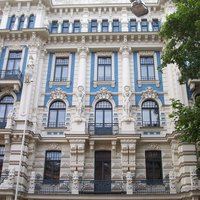
The former Riga Stock Exchange building (now Art Museum Rīga Bourse), a grand Venetian Renaissance palazzo-style structure designed by Harald Julius von Bosse and built between 1852 and 1855 on Doma laukums (Dome Square), functioned as Riga's dedicated securities and commodities exchange hall until the Soviet era, its opulent facades featuring allegorical sculptures symbolising trade and agriculture while lavish gilded interiors evoked mercantile wealth. Celebrated Baltic trade wealth. Extensively restored after a 1980s fire, it now houses the Art Museum Rīga Bourse with major collections of foreign art, fully open to the public as one of Riga's premier attractions. (link)
-
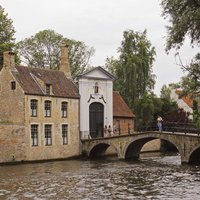
The Huis ter Beurze, a medieval Gothic merchant house and inn from around 1309, served as the prototype bourse where traders negotiated bills of exchange and early securities, pioneering organised financial trading; the site is now private commercial property, viewable only from the exterior with no public interior access.
-
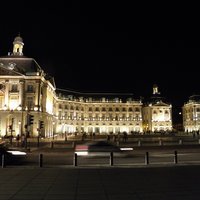
The Palais de la Bourse, a neoclassical gem by Ange-Jacques Gabriel (1730–1775), was Bordeaux's stock exchange for securities trading, its elegant facades symbolising 18th-century maritime wealth; it now hosts the Chamber of Commerce for offices and events, with the exterior and square accessible but interior entry limited to occasional special events. (wiki)
-
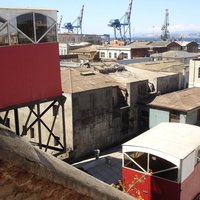
The Edificio de la Bolsa de Valparaíso (1911–1915), a five-story neoclassical building with a distinctive cylindrical corner and French-style cupola, operated as Latin America's first dedicated securities exchange until the 1980s, reflecting Valparaíso's port-driven financial boom; . Projected modern port-finance prestige in Latin America Is now a historic monument used for offices and events, viewable externally with limited interior access for visitors on request. (wiki es)
-
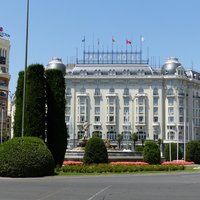
The Palacio de la Bolsa de Madrid, a grand neoclassical structure by Enrique María Repullés (1884–1893), centred Spain’s securities trading with its columnar facade and symbolic sculptures; it remains the active stock exchange headquarters. Echoed national financial might. Viewable externally with interior access via pre-booked guided tours only. (wiki es)
-
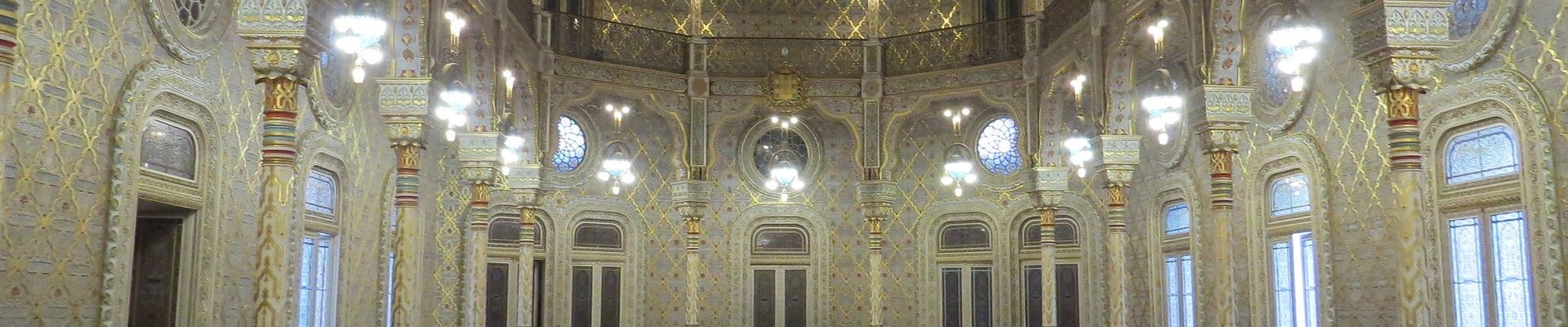
The Palácio da Bolsa (1842–1910), headquarters of Porto’s Commercial Association, functioned as the securities exchange and boasts neoclassical exteriors with lavish eclectic interiors like the gilded Arabian Hall Symbolised enlightened prosperity and maritime empire. Is now a top cultural attraction, fully open to the public via mandatory guided tours. (link)