Connected Sites
-
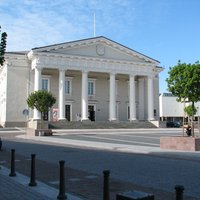
The Vilnius University complex features a permanent Foucault pendulum in the belfry of St. John's Church continuing the university’s centuries-old tradition of astronomical and physical research. Installed in a custom-designed shaft within the tower, the pendulum includes a light-sensitive sensor that tracks the movement of the bob over a circular scale. (picture link)
-
The Department of Physics unveiled a new Foucault Pendulum in Oct 2015 in order to commemorate its 725th anniversary with a permanent, "monumental" scientific landmark. "As one of the oldest universities in continuous operation in the world, the pendulum—a symbol of the "persistence of truth" and the movement of time—was chosen as a physical representation of the university's enduring legacy." (link)
-
-
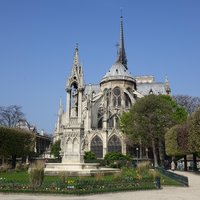
The Panthéon serves as the most famous site for this experiment, as it was the location of Léon Foucault’s original public demonstration in 1851. The building’s vast dome provided the necessary 67-meter clearance for the pendulum’s swing. Today, a permanent working replica is installed in the same location, serving as a monument to 19th-century scientific achievement within the core zone of the Paris WHS. (link)
-
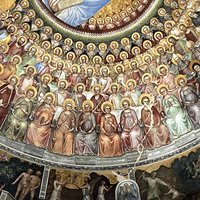
The pendulum was placed in the Palazzo della Ragione ("Palace of Reason") on April 19, 2006, by the University of Padua and the local municipality to serve as a permanent scientific bridge within the medieval building. Suspended from a 20-meter steel wire attached to the historic wooden roof beams, the 13 kg sphere oscillates in the southeast corner of the great hall, specifically positioned beneath the fresco of Aries. This placement is deeply intentional, as it marks the starting point of the building's massive 14th-century zodiacal cycle, which depicts human character and labor as determined by the movement of the stars.
The pendulum was introduced during the International Year of Physics to manifest the city’s identity as a center of scientific inquiry and to honor its historical connection to figures like Pietro d'Abano. (link)
-
There is a Pendulum in the Metropolitan Cathedral. It utilizes the Foucault principle but serves a dual purpose: demonstrating the Earth's rotation while primarily measuring the 'differential sinking' of the Cathedral sitting on Mexico City's soft and subsiding soils! (image link)
-
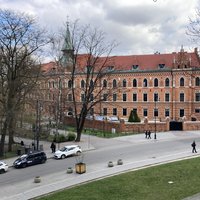
The Church of Saints Peter and Paul, located in the heart of the inscribed Old Town, houses Poland's longest Foucault pendulum. Measuring 46.5 meters, the device is suspended from the church's dome and is used for weekly public demonstrations that illustrate the Earth's rotation. Its presence within this Jesuit architectural masterpiece highlights the historical connection between religious institutions and scientific inquiry in Kraków. (link)
-
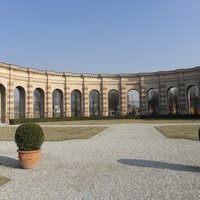
The Rotunda within the Flower Garden (Květná zahrada) houses a permanent Foucault pendulum installed in 1906. Suspended from the center of the dome, the pendulum is part of the original scientific-artistic ensemble of the pavilion. The mechanism is a fixed feature of this inscribed site, representing the intersection of Baroque landscape design and Enlightenment-era scientific curiosity. (link)