Connected Sites
-
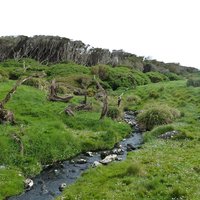
Auckland Islands: Southern Rātā trees (Metrosideros umbellata). This link has a video of them 'social distancing' at Enderby Island.
-
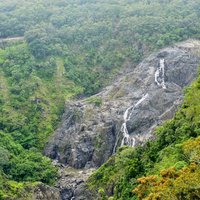
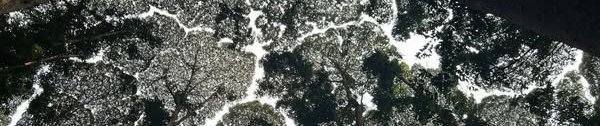
A prime location to see crown shyness in non-dipterocarp species. Tree Species: Various Eucalyptus species and Black Mangrove (Avicennia germinans) in the coastal fringes. Australian foresters were actually among the first to study crown shyness here in the 1950s. The Eucalyptus trees in this region show a "messier" but still distinct version of the phenomenon, often caused by "reciprocal pruning" where the branches literally knock the growing tips off each other during storms.
-
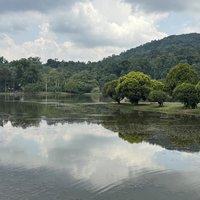
Considered the "textbook" example of the phenomenon. The trees are Dryobalanops aromatica, commonly known as Borneo camphor, camphor tree.
-
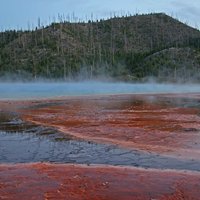
Yellowstone offers a rugged, temperate version of this phenomenon, with its Lodgepole Pine (Pinus contorta). Because Lodgepole Pines are so dominant, you can see crown shyness almost anywhere in the park’s forested interior. However, two areas are particularly notable: Madison Plateau and West Yellowstone Basin.
-
Home to some of the tallest dipterocarp trees in the world, many of which exhibit crown shyness. Tree Species: Various Dipterocarps (especially members of the Shorea and Dryobalanops genera). Because these trees grow so tall and have relatively stiff, heavy branches, they create very distinct, wide "channels" of light in the canopy to avoid damaging each other during heavy tropical winds.
-
Crown shyness can be observed in the lower montane forests. Tree Species: Borneo Camphor (Dryobalanops aromatica) and several species of Eucalyptus. In the dense, humid slopes of Mount Kinabalu, the crown shyness of the Dipterocarp canopy is often accentuated by the mist and clouds that drift through the gaps, creating a "halo" effect around individual tree crowns.