Connected Sites
-
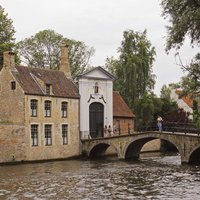
Bruges was the birthplace of the Order in 1430 and the site of the earliest sovereign Chapters where the founding principles of the brotherhood were established. The Church of Our Lady contains the sixteenth-century tombs of Mary of Burgundy and Charles the Bold; the latter is depicted in bronze, wearing full armor and the collar of the Order of the Golden Fleece, marking his status as its third Grand Master. The church also retains thirty painted armorial panels from the Chapter of 1468. (wiki)
-
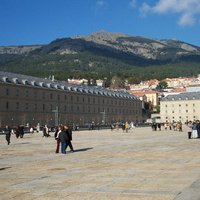
The Escorial was established by Philip II as the ideological heart of the Spanish Empire and the "Pantheon" of the Order’s Grand Masters. It served as the site where the Habsburg kings were both celebrated as sovereign heads of the Order and eventually interred. This historical role is manifested by the Order's collar sculpted into the main portals of the building and featured on the sarcophagi within the Royal Pantheon, marking the site as the final resting place of the Order’s leadership.
-
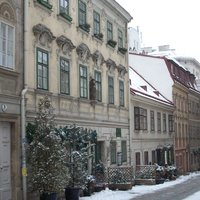
Vienna became the permanent seat of the Austrian branch of the Order of the Golden Fleece following the dissolution of the Burgundian state with the Death of Charles the Bold in 1477. The Hofburg Palace served as the residence of the Grand Masters and the administrative center of the Order’s activities for centuries. It housed and houses the Order's archives and ceremonial sacred objects. This historical continuity is demonstrated by the heraldry on the 16th-century Swiss Gate and the presence of the "Potence" and ceremonial robes within the Imperial Treasury. (link)